
×

Posts Tagged ‘Harrogate College’

It’s time to end the academic-technical divide

For too long, academic and technical education have been treated as separate routes. Yet we should not expect young people to choose between them at an early age. That divide does not reflect what young people need or what employers value.

The Government’s proposals to expand technical education for 14- to 16-year-olds are a step in the right direction. Giving young people access to high-quality vocational learning can widen opportunities and connect education more effectively to the needs of the workforce.

But we should be more ambitious.

Rather than creating a stronger technical route alongside an academic route, we should use this opportunity to rethink the architecture of education itself, creating an integrated tertiary system in which academic knowledge, technical capability, vocational learning and practical experience combine.

Schools, colleges, universities and employers are often incentivised to operate in isolation. Building an ecosystem with a shared ambition will allow for seamless progression between education, training and employment, with strong regional accountability. 

We also need to challenge long-standing assumptions. Technical education should not be seen as the only option for practical learners, or those who have not thrived in mainstream education. Equally, those who pursue an academic route should not miss out on practical opportunities.

Employers increasingly need people who can combine different types of skills. Engineers need mathematical and theoretical knowledge, health professionals need academic knowledge and practical competence, and designers need theory, creativity and technical capability. Modern work is increasingly interdisciplinary, yet our education system still asks young people to make artificially binary choices.

Skills England’s 2026 Annual Skills Report shows that more than a quarter of job vacancies are hard to fill due to skill shortages. This highlights the importance of developing the transferable skills that enable young people to succeed in the workplace – from communication and teamwork to problem-solving and adaptability.

It also underlines the need for an education system built around the workforce of the future, where academic, technical, vocational and occupational learning are complementary. The ambition should be about progression, not just pathways, where young people can move between these routes without being labelled or trapped by a choice they made at 14 or 16.

The new V Levels policy by Skills England is encouraging as it creates greater scope for learners to blend academic and vocational learning, allowing combinations of qualifications that better reflect individual interests. We now have the opportunity to embed that principle across the wider education landscape, so qualifications become components of one system.

We need clear, mapped progression routes to higher apprenticeships, university and employment, ensuring that every stage of learning connects meaningfully.

Nearly one million young people aged 16 to 24 in the UK are not in education, employment or training (NEET), highlighting the need for education providers and employers to work together to smooth the transition from education to the workplace.

At Leeds City College, our 14+ Academies, which offer a direct-entry option for young people in Years 10 and 11, provide an opportunity to build connections early by creating an environment where real-world and employability skills sit alongside academic learning.

Universities must be part of the conversation too, working closely with FE providers to widen access and remove barriers to learning. Our strategic alliance with Leeds Beckett University, alongside our own HE provision at University Centre Leeds and Leeds Conservatoire, is based on that ambition: retaining our distinctive identities and strengths while deliberately designing provision, progression and collaboration so that learners experience a coherent educational journey rather than institutional silos. 

This matters because skills needs vary across different areas. A successful tertiary system should reflect local economies and communities, with employers helping shape the provision and local businesses and institutions all working together to help young people progress.

The economy doesn’t need more technical education at the expense of academic education. It needs people with the right blend of knowledge and skills.

We should stop asking which route a young person is on and start asking whether the system is giving them the tools they require to progress. If we get this right, the reforms could help accelerate the building of an integrated tertiary skills ecosystem that our young people, employers and region need.

By Bill Jones, CEO, Luminate Education Group

Leading the Apprenticeship Charge: Kelly Marie McAllister on Opportunity, Skills, and Ambition at Luminate Education Group

As businesses across Yorkshire grapple with widening skills gaps and the need to build future-ready workforces, apprenticeships are once again taking centre stage. At the heart of this is Kelly Marie McAllister, recently appointed Group Director of Apprenticeships at Luminate Education Group – one of the largest college groups in the UK.

With 16 years of experience in further education and apprenticeships, Kelly joined Luminate with a clear ambition: to drive growth, enhance quality, and ensure apprenticeship delivery meets the needs of both learners and industry – locally, regionally and nationally.

“I was ready to take the knowledge and expertise I had developed over my career and put it into practice on a larger scale,” says Kelly. “Luminate is the fourth largest college group in the country, and the opportunity to help shape its apprenticeship strategy genuinely excited me.”

A Vision Built on Experience

Kelly’s experience in the sector has been a powerful influence on her leadership style. Her ethos centres on being a “positive disruptor” – using her platform not only to shape apprenticeship strategy but also to widen participation, drive innovation, and advocate for long-lasting change.

“My experience has given me the confidence to use my voice. I’m passionate about providing life-changing opportunities for those entering apprenticeships – and also for those working within the sector,” she explains.

Now in post, she has quickly established a clear set of priorities: growth, quality, culture and reputation. One of her first actions has been to strengthen Luminate’s team of apprenticeship specialists across both employer engagement and teaching and assessment. But just as crucial is the work she’s leading externally.

“We’re developing new and exciting networks regionally and nationally for both employers and apprenticeship specialists. Collaboration is key if we’re serious about tackling shared challenges around skills.”

Addressing the Region’s Skills Needs

Luminate’s apprenticeship provision has a broad footprint, including Leeds City College, Harrogate College and Keighley College – each with its own local identity and employer needs. Kelly is acutely aware of how critical it is to align apprenticeship delivery with those local priorities.

“We’re seeing acute shortages in sectors like construction, engineering and manufacturing, and health and care,” she says. “These are being exacerbated by a lack of qualified tutors leaving industry for teaching roles in FE. That’s why employer collaboration is so important – so we can share their expertise with the next generation, their future workforce.”

As part of her strategic approach, Kelly is keen to balance national data with real-world employer insight. She values the recent creation of Skills England, which is set to provide national direction, but believes that on-the-ground engagement is just as vital.

“I’m passionate about developing a destination-led curriculum. Skills England and labour market data give us the headlines, but meeting directly with local employers – from microbusinesses to SMEs and large levy payers – gives us the context. You need both to make informed decisions.”

Evolving How Apprenticeships Are Delivered

Internally, Kelly is also rethinking how the Group engages with employers through redesigned Employer Boards. The aim is to deepen partnership working and ensure feedback directly informs curriculum development and delivery. At a time when employer participation is often a limiting factor in the number of apprenticeships taking place, strong collaboration can ensure that the number of apprenticeships on offer more closely meets demand. 

“We’ve updated our terms of reference and are really driving forward the idea of collaboration across the group. It’s about co-creation – building pathways that work for businesses as well as learners.”

This evolution is particularly relevant as apprenticeships continue to shift in public perception. Kelly believes strongly in reframing the apprenticeship offer – not as a second-choice alternative to university, but as a high-quality, sought after route that takes learners directly into the workplace, or even to degree level and beyond.

She’s also focused on inclusivity – ensuring that apprenticeship opportunities reach underrepresented communities and learners who might otherwise miss out.

Looking Ahead

Kelly’s long-term vision for apprenticeships at Luminate is ambitious, but it’s rooted in a strong belief in the power of collaboration and civic responsibility.

“We’re not just here to respond to employer needs – we want to lead. Apprenticeships should be transformative for individuals, businesses, and entire communities.”

As Yorkshire and the UK continue to invest in skills and growth, leaders like Kelly are ensuring that apprenticeship delivery is more than reactive – it’s strategic, collaborative and future-facing.

Employment must be a measure of success for SEND reforms

Chris Thornton, Director of Inclusive Provision and SEND, Luminate Education Group

For hundreds of thousands of children and young people with special educational needs and disabilities (SEND), the education system is not just about learning – it shapes their independence, confidence, and future opportunities. Yet too often, the outcomes they achieve do not reflect their potential.

Nationally, more children and young people than ever are being identified as needing support. Over 638,000 now have an Education, Health and Care Plan (EHCP) – an 11% rise from January 2024 to January 2025 – and more than 1.6 million pupils are identified as needing SEND support. At the same time, local authorities are facing mounting financial pressure, with many operating significant deficits linked to SEND provision.

Taken together, this paints a picture of a system at a tipping point. Demand is rising rapidly, expectations are increasing, yet outcomes for too many young people remain far from where they should be. If reforms are to deliver on their promise, success cannot be measured by plans alone, but by what young people go on to achieve after education.

The White Paper, Every Child Achieving and Thriving, alongside the Putting Children and Young People First consultation, sets out a vision for a more consistent and inclusive system, with earlier intervention and better preparation for adulthood. These reforms recognise the inclusive practices of further education providers and include a commitment to expanding supported internships, alongside more tailored one-to-one support for learners with SEND. By creating clearer pathways into employment and training, the government aims to better support young people with SEND, who are currently around 80% more likely to be NEET than their peers.

Yet just 4.8% of people with SEND move into sustained paid employment nationally. Too many leave education without a clear, supported pathway into work, making supported internships one of the clearest ways to bridge that gap.

Across our group, we see the impact daily. At Keighley College, Dylan Worsnop joined with a goal to follow in his father’s footsteps as a welder. Through his supported internship with Acorn Stairlifts, he developed the skills and confidence to thrive, ultimately securing a full-time role. 

Stuart Aveyard, a former Leeds City College student, exemplifies how persistence and ongoing support make a difference. Over several years, he developed skills through a range of placements. When his initial internship did not lead directly to employment, he did not give up – and neither did the support around him. With continued guidance from job coaches, he progressed into a second internship, built his independence, and ultimately secured full-time employment, where he remains today.

At Harrogate College, four students were placed with Harrogate and District NHS Foundation Trust and Harrogate Integrated Facilities through DFN Project SEARCH. They rotate across departments such as IT, equipment services, and groundskeeping, gaining real-world skills with close tutor support.

Yet nationally, only 9 – 10% of young people with EHCPs access supported internships, and just one in four remain in employment a year later – highlighting the need for structured support beyond the internship itself. The system has historically focused on what is taught academically, rather than helping them prepare for adulthood, employment, independence and becoming part of the wider community. Such skills must be embedded from an earlier stage. Preparation for adulthood – including employment, independence, and community inclusion – must be embedded from an earlier stage.

Supported internships should not be a niche offer but a central pillar of a system genuinely focused on outcomes. This requires sustained investment, stronger employer partnerships, and recognition that support should not end the moment a young person secures a job. Employers also benefit – supported interns bring with them a strong work ethic, fresh perspectives, and tangible value.

As National Supported Internship Day highlights, the model works. The challenge now is to scale it so that for young people with SEND, employment becomes a genuine expectation, not the exception.

Future Culinary Stars Shine in ‘Chef of the Year’ Cook-off at Harrogate College

Harrogate College’s hospitality students played a key supporting role in a high-pressure cook-off that saw four of the town’s most promising chefs compete for the prestigious Chef of the Year title.

Part of the 2025 Harrogate Hospitality & Tourism Awards (HHTA), the event was held in the college’s professional-standard training kitchens and gave Harrogate College’s hospitality students the opportunity to support the event through logistics and food preparation.

They worked closely with the competitors – observing, assisting, and learning from the region’s culinary elite – gaining valuable insight into real world culinary environments.

The finalists were challenged to create two standout dishes – a refined amuse-bouche and an impressive main course – under the watchful eyes of industry judges and with just 90 minutes on the clock.

Adding to the challenge, the chefs had to work from a mystery box of ingredients revealed on the day, using only equipment provided on-site, with the exception of one personal item. To ensure a fair judging process, the competition was carried out blind, with dishes delivered to the judging panel anonymously.

Danny Wild, Principal of Harrogate College, said: “We were absolutely delighted to host this year’s Chef of the Year cook-off. Not only was it a fantastic showcase of local culinary talent, but it also gave our students the chance to see the very best of the industry in action – right here on campus. Supporting the next generation of chefs and helping to raise the profile of hospitality in Harrogate is something we’re very proud to be part of.”

The event, designed to shine a spotlight on the exceptional hospitality talent in the region, forms part of the lead-up to the main awards evening on Monday 2 June, where the overall winner will be announced.

Tom Gordon, MP for Harrogate and Knaresborough and an advocate for the town’s famous hospitality and tourism sector, said: “Events like these provide a brilliant way to celebrate and champion the vital role hospitality plays in our local economy. The culinary skill and creativity on show is truly inspiring, and it’s great to see Harrogate College playing a central role in nurturing future talent.”

Harrogate’s Hospitality and Tourism Awards have been running now for 17 years to celebrate the best of the best that the town has to offer. With hospitality representing a central feature within Harrogate’s economy, these awards capture the imagination of all who work directly or indirectly in hospitality and tourism, as well as many of the general public who use the many bars, restaurants, hotels, cafes and other supporting attractions.

Simon Cotton, Organiser of Harrogate Hospitality & Tourism Awards, said: “The Chef of the Year is one of the most prestigious of the 12 categories in the awards and is a very much sought-after accolade. Several years ago, with the help of Harrogate College, the competition stepped up a significant level, with the introduction of a blind cook-off in the college’s catering kitchens.

“Working with Harrogate College is an absolute pleasure and it is fantastic that their young student chefs work alongside the competitor chefs helping develop their own skills and hopefully inspiring the next generation.”

The cook-off highlighted the creativity, technical skill and passion that exist within Harrogate’s hospitality scene – offering a taste of what’s to come at the Harrogate Hospitality & Tourism Awards in June.

Apprenticeships at the Heart of Regional Growth

This year, Luminate Education Group, which runs a number of colleges and high education institutions across Yorkshire, is proud to relaunch our 100 in 100 campaign. The aim is to secure 100 new apprenticeships in just 100 days. Previously, this initiative has connected dozens of young people with meaningful career opportunities, and given over 100 employers the skilled support they needed to grow.

The impact was clear. Apprentices gained confidence, qualifications, and a future. Employers gained motivated team members who made a difference from day one. And, crucially, it helped address some of the gaps in priority sectors such as health and social care, education, and manufacturing – three of the region’s largest employers.

Across Yorkshire, employers are facing a familiar challenge: finding and developing the skilled workers they need to grow and thrive. 

Only 0.3% of people in our region hold a trade apprenticeship qualification – a strikingly low figure given the scale of workforce demand. That’s why apprenticeships are more important than ever: they’re one of the most practical ways for businesses to grow their own skilled talent, while giving local people access to sustainable, rewarding careers.

As I step into my new role as Group Head of Business Development at Luminate, I’m focused on strengthening apprenticeship opportunities across West and North Yorkshire – making sure they work as well as possible for both learners and employers.

Every week, I hear stories from both employers and apprentices about the positive impact of apprenticeships. Apprentices are taking on new responsibilities, often moving into leadership roles, and regularly progressing onto higher-level qualifications. We’re building a thriving alumni community that demonstrates the long-term value apprenticeships can deliver.

At Keighley College, which celebrates its 200-year anniversary this year, we’ve run successful apprenticeships with local employers since the 1950s. Many of those early apprentices went on to play pivotal roles in their sectors – from manufacturing and skilled trades, which still employ tens of thousands locally, to professional and technical roles that are now among the region’s fastest-growing.

That idea of “see it to be it” really matters. The best way to inspire someone to take up an apprenticeship is to let them hear directly from those who have already benefited. Recently, for example, Roger Page – a former Keighley College apprentice who went on to build a successful career in aviation – returned to share his story with current apprentices. Hearing directly from someone who started where they are now, and who has gone on to achieve so much, shows what’s possible.

By Clare Fitzgerald, Group Head of Business Development at Luminate Education Group

Navigating the post-16 education maze

For so many people, Level 3 qualifications represent a vital step towards their future career – but the array of options available, in both vocational and academic routes, can be baffling. With the government’s review of a proposed overhaul of these courses now complete, has the path become any clearer?

For students and parents alike the sheer breadth of options available in post-16 education can be both exciting and a little overwhelming.

The previous government, in a bid to improve skills and employability while streamlining the system, began a wide-ranging reform of Level 3 qualifications which looked at everything from BTECs and T Levels, to A levels and apprenticeships.

The stated aim, to create “clearly defined academic and technical routes” for post-16 progression, was admirable. But the shake-up also carried real risks, not least through the proposed ending of hundreds of courses, including many BTECs; with the worry being that some learners could be left with nowhere to go.

So the current government’s decision to hold a review of the reform process, to end some of that uncertainty, was welcome. Now we have the outcomes of that review, what is the outlook for colleges like ours and prospective students?

The headline result is that no fewer than 157 of those originally under-threat qualifications will continue, at least for the next year or two. We also have assurances that the defunding of certain qualifications will be done in phases, to minimise disruption and allow for a more managed change.

Of equal importance is the government’s decision to leave the question of what combinations of qualifications education providers can offer to them. Its report, The outcomes of the Review of Qualifications Reform at Level 3 in England, states: “It should be for colleges and sixth forms to work with students to devise the best mix for each individual.”

That makes perfect sense as each area’s college is much better-placed than the Department for Education to know what skills-blend is actually needed by its local economy, and therefore its learners. Many colleges have spent decades building up strong working relationships with their region’s businesses and organisations, and sometimes formalised this process – as we have through Harrogate College Employers’ Network – to increase its effectiveness.

Doing so reaps all kinds of tangible benefits. For our students, for example, it has led to collaboration and work experience with respected organisations like RHS Garden Harlow Carr, Rudding Park and Techbuyer, to name a few. Our partnership with Harrogate District Hospital, meanwhile, has secured T Level placements, supported internships and a variety of apprenticeship opportunities.

And our business links also ensure a steady stream of fact-finding trips for our learners to places like Energy Oasis, Transdev Blazefield, top tier local restaurants and West Yorkshire Police’s training centre at Carr Gate Complex, while local businesses regularly visit our campus to share their expertise.

These kinds of experiences, the result of hard-won grassroots knowledge and years of networking, are mirrored in colleges across the country. So it is pleasing to see the government, in its findings, acknowledge the value of that.

The review report notes that: ‘Students and employers need a simpler range of high-quality qualifications, which provide them with the skills they need’. With funding set to be removed from more than 200 less popular courses, the simplification part of that ambition seems to have been at least partially accomplished.

The challenge has been to ‘trim away the fat’ while ensuring the courses that remain offer a valuable and accessible pathway for students of all kinds of ability levels.

That appears to have been achieved, as learners still have a rich and layered range of routes into their chosen career or next educational stage, outside of the traditional academic route of A levels-then-university.

T Levels, which blend classroom learning with substantial industry placements, are the high-level technical option that the government is particularly keen to promote. It is easy to see their appeal: not only do they give learners a ‘head start’ and experience in their chosen field, but also – with each T Level being worth the equivalent of three A levels – offer an alternative path to university.

Alongside these exist a wide range of BTEC and other applied general technical qualifications which also support progression into work or higher education. These qualifications cover subjects ranging from electrical engineering, bricklaying and childcare to business and marketing, creative media and uniformed protective services. And then there are all the apprenticeship and internship options, which can provide direct routes into so many different kinds of jobs.

So, there’s still plenty to consider for those mulling over their next steps. The important thing for prospective students to remember is that teachers, careers advisers and colleges, across Yorkshire and the UK, are here to help them decide what will work best for them: the door is open.

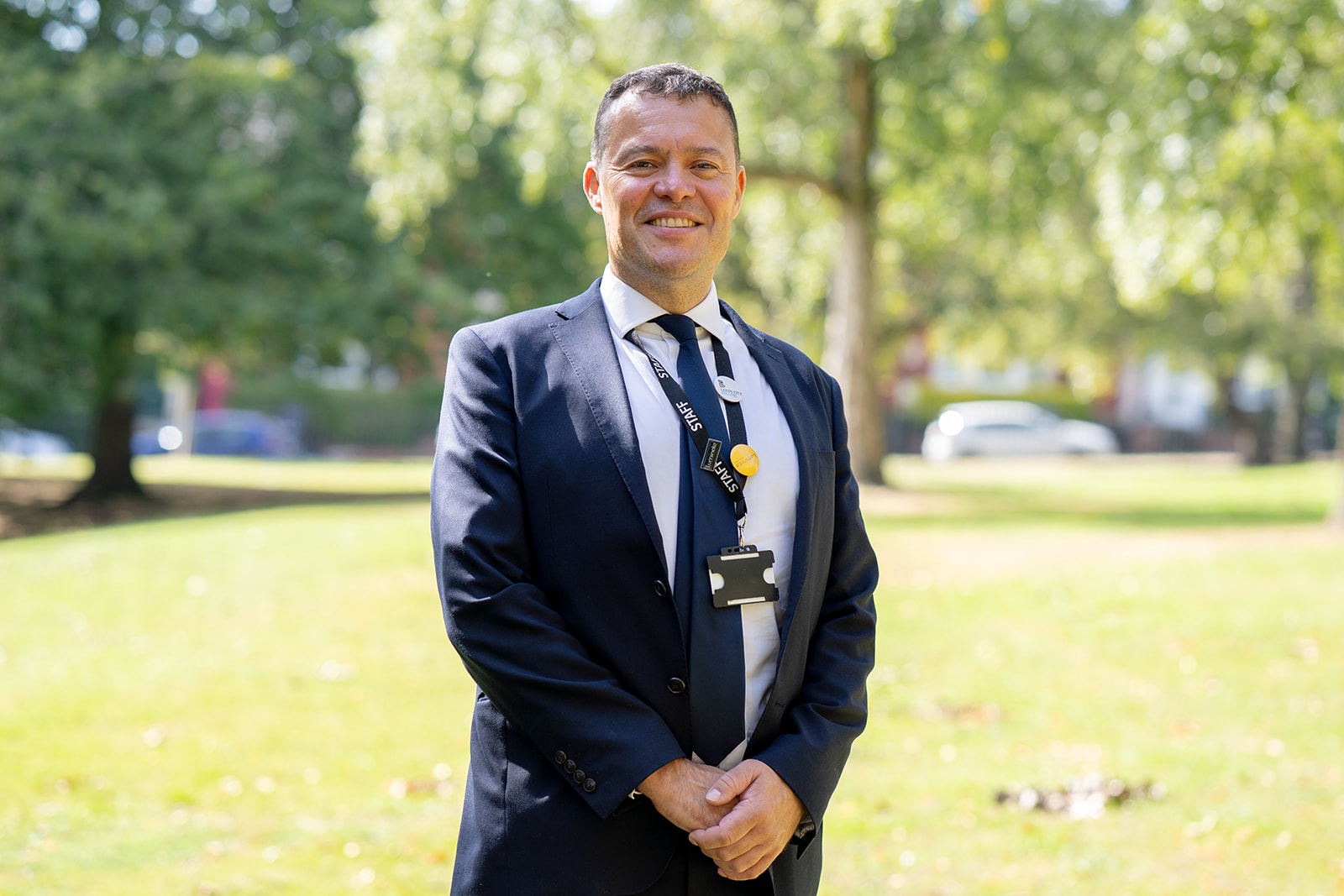
Danny Wild is Principal of Harrogate College, which is a member of Luminate Education Group.

Website designed and built by Web Phizix