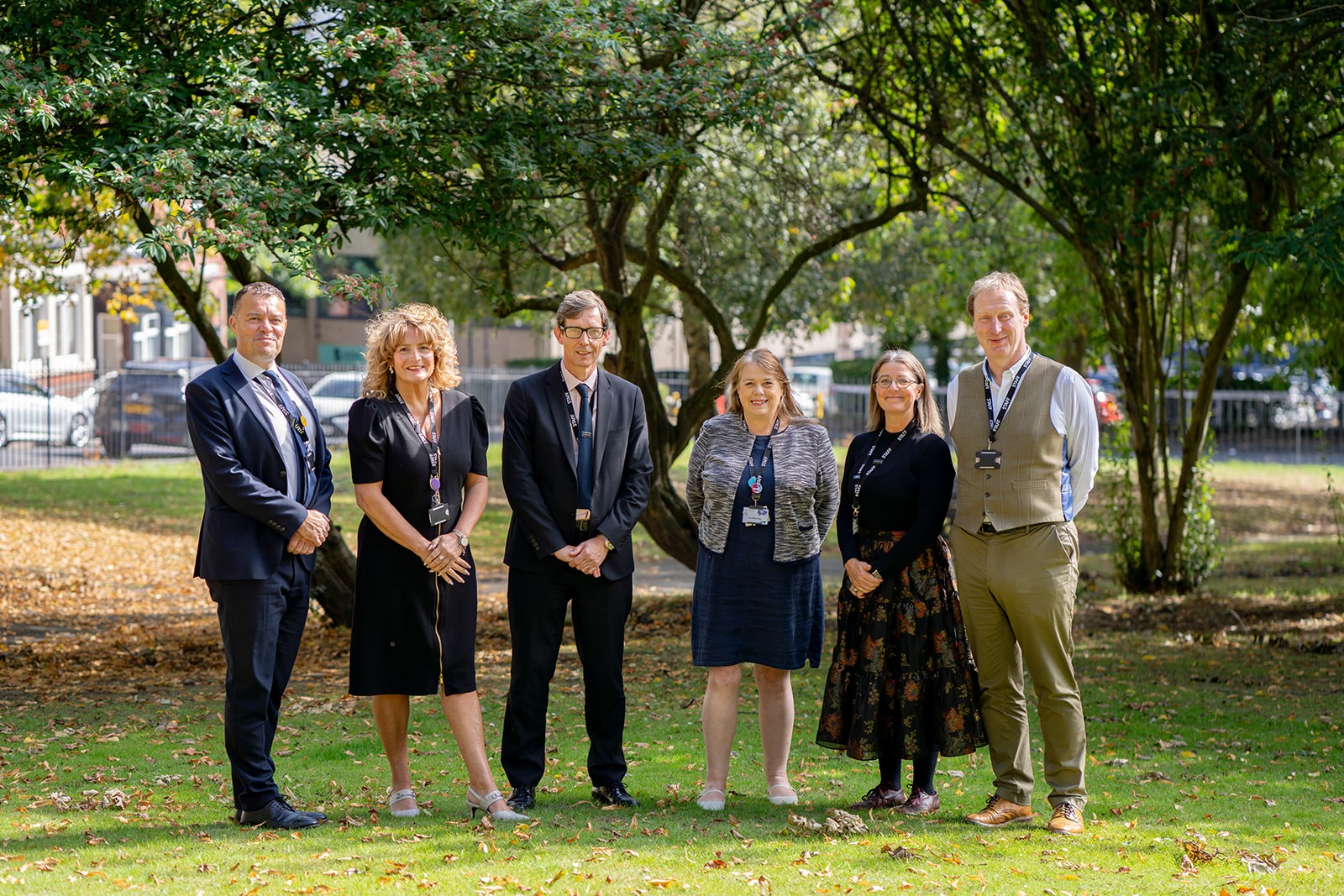
Julie Hyde has been appointed as our group’s new Chair of the Board of Governors.
Julie joined Luminate Education Group as a co-opted member of the Leeds City College Board in 2022, joining the Group Board as a governor in 2024.
She succeeds our previous Chair, John Toon – who ended his tenure at the end of July 2026 – in the role. John will remain with the group as a co-opted member, and continue to contribute to certain board meetings and committees.
The Board of Governors ensures that the group is financially secure, well managed and delivers high-quality education.
Julie said: “It is a privilege to take up the position of Chair of the Luminate Education Group Board of Governors.
“I look forward to supporting the group’s continued success in delivering exceptional education, ensuring strong governance and responding to the opportunities and challenges facing the education and skills sectors. I am particularly passionate about widening opportunities for learners and ensuring that education remains closely connected to the needs of employers and communities.
“I am especially looking forward to spending time with colleagues and governors across the organisation, deepening my understanding of the breadth of its provision and helping shape the group’s future direction.
“By working collaboratively, we can make a positive civic impact and contribute to the region’s continued development.”
A distinguished career in education and business
Julie has built a distinguished professional career in education, skills and childcare and is Director of External and Regulatory Affairs at NCFE, one of the UK’s leading educational charities and awarding organisations.
She brings extensive leadership experience to her role as Chair, along with a strong commercial background in senior sales and account management.
Julie joined CACHE (the Council for Awards in Care, Health and Education) in 2010 and, following its integration into NCFE in 2015, led services to support its nationally recognised qualifications and ensure they met the needs of employers, providers and learners.
One of her many successes included the Save Our Early Years campaign, which helped secure government recognition of Functional Skills as alternatives to GCSE maths and English for entry to employment, as a Level 3 Early Years Educator.
Julie also has governance experience across early years, special educational needs, adult care and further education. Passionate about good governance, collaboration and public service, she is committed to keeping education and skills provision connected to the needs of learners, employers and communities.
Julie lives in West Yorkshire and enjoys time with her family and singing with a women’s choir and small ensemble.
The government has published a set of wide-ranging new proposals for further and higher education.
The White Paper includes plans to introduce new technical qualifications, V Levels, and implement a more targeted, data-driven approach to plugging skills gaps in key areas.
There are also proposals to provide greater intervention and support for young people not in education or employment (NEET), and to raise annual university fees automatically, linked to inflation.
Our senior leaders have been carefully analysing each of the report’s main points to weigh up their merits and see what the implications are likely to be for our members.
Matching skills to industry
On labour market alignment, Bill Jones, our CEO Designate and Executive Principal Leeds City College, said:“A skills system that more closely connects education and employment into priority sectors is long overdue.
“Skills England’s national coordination, combined with devolved local planning, could maximise the role of skills as a genuine engine of economic growth, but only if colleges are effectively resourced to deliver and respond quickly to changing demand.”
Recruitment plans
Turning to FE teacher recruitment, he added:“Recruiting and retaining specialist FE teachers remains one of the greatest challenges facing further education.
“The proposals for professional development and industry exchange are welcome, but they must be matched by a funding settlement that allows colleges to offer competitive pay. Without tackling that gap, we risk losing the expertise that an ambitious and effective skills system depends on.”
Action on NEETs
On reducing NEET rates, group CEO Colin Booth said:“We welcome the commitment to make sure no young person is left without a place in education or training.
“But that ambition won’t be achieved unless post-16 capacity keeps pace with demand. Across Leeds and in many other cities, colleges are already at maximum capacity, and the number of 16-to-18-year-olds is still rising.
“The Youth Guarantee, the automatic allocation of college places and improved data sharing on learners at risk of becoming NEET are all positive steps forward, as is the strengthened role of secondary schools in supportive effective transitions into post-16 education. Without sustained investment into teaching space, staffing and support services, however, we risk seeing more young people left without a suitable place to learn.”
Qualification reforms and V Levels
On V Levels and qualification reform our Deputy CEO, Gemma Simmons-Blench, said: “Clarity and consistency in qualifications will help students, employers and providers alike.
“The move toward a smaller suite of high-quality Level 3 routes, including V Levels, is sensible, provided it protects progression opportunities and recognises the diverse needs of learners. Level 3 qualifications in scope for defunding should only be removed when a similarly accessible alternative is in place. Reform should simplify and enhance choice, not narrow it.”
Funding formula ‘must recognise realities’
On the review of the 16-19 funding formula, Gemma added: “A review of the 16-19 funding formula is long overdue.
“Colleges are educating record numbers of young people on funding levels that simply haven’t kept pace with inflation, pay pressures, or the growing complexity of learner needs. The current formula doesn’t reflect the higher delivery costs of technical programmes, industry placements or support for SEND learners.
“If the Government wants the post-16 education and skills system reform agenda to succeed, the updated formula must recognise the real cost of delivering high-quality education and provide the stability for greater flexibility and planning.”
More details needed on English and maths shake-up
She also had these reflections on the proposed English and maths reforms: “It’s right that the Government wants every learner to leave education with solid English and maths skills that provide the foundation for employability.
“It’s extremely positive that the Government have recognised the issues that face further education providers, but the detail behind the proposed new Level 1 qualification will be crucial. We need to understand how it will differ from existing functional skills, which learners it will be available to, what progression routes it will support, and how it will be funded and assessed.
“We also need to know whether this new qualification will be ring-fenced for post-16 students or accessible at an earlier age, as is the case with functional skills.
“Alongside these reforms, it would also be extremely beneficial for dedicated post-16 GCSE English and maths papers to be introduced, built specifically for resit students. Colleges deliver the bulk of this provision, so getting the structure and resourcing right will determine whether the reform genuinely raises attainment or simply rebrands what already exists.”
When we talk about economic growth, we often focus on major investments, infrastructure projects and ambitious targets. Less attention is given to the people who will ultimately deliver them.
Across Yorkshire, employers tell us that finding people with the right skills is becoming increasingly difficult. At the same time, more than one million young people across the UK are not in education, employment or training (NEET) – that’s around one in eight 16 to 24-year-olds. Connecting these challenges presents a major opportunity. As investment in housing, infrastructure and the transition to a greener economy gathers pace, ensuring people have the skills employers need will be essential to delivering growth.
Local Skills Improvement Plans (LSIPs), alongside regular employer feedback, continue to highlight shortages across sectors including construction, engineering, housing, manufacturing and professional services. Demand is only likely to increase as investment continues in housing delivery, retrofit programmes, transport and utilities. This is why skills development cannot sit on the sidelines of economic policy.
The new government’s commitment to accelerating housebuilding, alongside regional ambitions to increase the supply of affordable and social housing, will only intensify demand for skilled trades. Ambitious housing targets cannot be achieved without a pipeline of electricians, plumbers, bricklayers, engineers and construction professionals equipped to deliver them.
Responding to what employers need
Across our group, which includes Leeds City College, Harrogate College and Keighley College, we work closely with employers to understand where skills gaps exist and how education can help address them.
That is why we have reintroduced apprenticeships in plumbing and electrical installation following consistent employer feedback about recruitment shortages. These trades will be vital to delivering many of the region’s priorities, from building new homes and upgrading existing housing stock to supporting net-zero targets and wider infrastructure improvements.
By creating apprenticeship opportunities in areas where demand already exists, we can help businesses recruit the talent they need while giving more young people a clear route into skilled employment.
We have also reintroduced the Level 2 Business Administration apprenticeship, reinforcing our commitment to creating accessible pathways into work. Before its withdrawal as part of the apprenticeship reforms, it was one of the most popular apprenticeships in England, attracting around 30,000 starts each year, with the majority of learners aged under 19. Many employers and learners lost an important entry-level route into the profession. Its return provides an important first step into the workplace, combining practical experience with the professional skills that employers value.
This is not an isolated case. We are seeing entry-level apprenticeship routes being removed despite clear evidence that apprenticeships are among the most effective ways to help young people move into sustained employment and reduce the risk of becoming NEET.
The wider impact of apprenticeships
Apprenticeships do much more than help employers fill vacancies. They open doors for people from a wide range of backgrounds, support social mobility and allow businesses to develop talent for the long term.
I’ve seen firsthand the difference apprenticeships can make. Take Emily Hawkes, who was taken on by Byworth Boilers as an apprentice welder after studying at Keighley College. Emily challenged outdated perceptions of the engineering sector while developing the specialist skills employers urgently need. Her journey from college into employment shows how apprenticeships create real opportunities for young people, while giving businesses access to the skilled talent they need to grow.
When training is aligned to genuine workforce needs, the benefits extend far beyond the individual apprentice. Businesses gain skilled employees, communities benefit from increased opportunity and local economies become more resilient. Major projects such as the proposed West Yorkshire Mass Transit system, alongside housing growth, retrofit programmes and wider infrastructure investment, will all require a workforce with the right technical expertise. If we are serious about delivering these ambitions, we must be equally serious about investing in skills.
Working together for Yorkshire’s future
Collaboration between employers, education providers and government will be essential to ensure training remains relevant, responsive and aligned to labour market demand. Initiatives such as the West Yorkshire Promise, which aims to guarantee every young person meaningful work experience before the age of 18 alongside expanded apprenticeship opportunities, are a positive step towards creating clearer pathways into employment.
Ultimately, success should be measured by outcomes: opening up opportunities for individuals, supporting business growth and building the skilled workforce that Yorkshire needs to thrive. We believe that colleges have a central role to play in that mission. By listening to employers, adapting our provision and investing in the skills that matter most, we can help build the workforce Yorkshire needs – not just for today, but for the future.
The country’s finances, as the autumn budget has just starkly reminded us, are in dire straits – which means how we choose to spend public money is more important than ever, writes Kevin O’Hare, Principal of Keighley College.
That is especially true in the under-resourced field of state education, which has such a key role to play in equipping our young people (and adults) with the skills the country needs.
That is why we at Keighley College – along with the Association of Colleges and many schools and academies – welcome the new value for money review of proposed new ‘free schools’ that has been announced by Education Secretary Bridget Phillipson. This will involve scrutinising 44 proposals that were approved, in principle, by central government under the previous administration. Those include plans for New College Keighley, an academic sixth form college that would be run by the New Collaborative Learning Trust (NCLT) and increase sixth form provision in the district by 1,000 places*.
Announcing the review, Ms Phillipson made it clear that her focus will be on avoiding the ‘over-supply of places’ which, as well as representing poor value, ‘can be detrimental to the other, more established’ schools and colleges in the relevant areas.
And this touches upon the very heart of the matter.
Creating a destabilising surplus
Supporters of the free schools programme, championed by the last government, claim these new schools and colleges help to plug educational gaps while raising standards and creating fresh opportunities.
Those arguments may have some merit in specific circumstances, but only if these new institutions are actually needed in the areas concerned in the first place. That is precisely what the new review will be considering.
A report by Schools Week last year showed that around three in five planned free school places were scheduled to open in areas that had increasing numbers of surplus places. That national picture is reflected locally: in Keighley, for example, we know that currently we only have around 800 sixth form students across the district. So quite how those 1,000 extra places that New College Keighley is targeting will be filled, is a mystery.
Indeed, a recent Bradford Council document – Post 16 Sufficiency Assessment for Bradford – noted that not only was there already more than enough A level and other Level 3 qualification provision, but that what the local authority area is actually crying out for is more educational places for lower level courses. The report states that while ‘supply of Level 3 provision is…now broadly in line with need’, there is ‘significant demand for pre-Level 3 provision’.
Redirecting urgently needed funding
For Keighley, and the Bradford District, the additional A Level places that would be created by the proposed new college are not only not needed but would risk destabilising other local education providers and, ultimately, wasting public money. That is not just our view but one shared by the leaders of eight local schools and three further education colleges.
By creating an over-supply of educational places and aggressive competition, we would be facing a situation where either the new college fails or student numbers drop away at one or more of the existing colleges, thereby threatening their survival.
Any of those scenarios would represent an unacceptable waste of public funds and risk damaging, rather than enhancing, the level of local academic attainment by spreading the number of student places – and so funding – too thinly.
The value for money review offers the Department for Education the chance to identify and cancel such expensive red herrings and, instead, look at where the money could be more wisely spent. We would contend that supporting the growing demand for T Levels plus other vocational or technical qualifications, which will help tackle the country’s skills gap, would be a great place to start.
Education for all
When we campaigned last year, as a member of the West Yorkshire Consortium of Colleges, against the then-government’s free schools plans, we and our partners raised the very same concerns that Ms Phillipson is now seeking to address.
We are confident this review will support our contention that, for most areas, these free schools and colleges would represent an unnecessary and costly distraction.
If so, we hope the Education Secretary will follow the logic of her argument and redirect the funds that are saved from scrapping such projects into our existing post-16 education provision: with a sharp focus on where additional places are required to meet local need.
A push for ‘elite’ provision, rather than local demand, was actually behind the previous government’s support for many of the new free sixth forms it approved in principle – which included proposals by Eton College and Star Academies Trust.
By conducting a thorough review, based on what represents the best possible value for public money, the new government can cancel some of these unneeded projects and put the funds to much better use. That would represent an important affirmation that raising the educational bar for the many, and not just a select few, is at the heart of its mission.
This thought leadership piece was recently published in The Yorkshire Post.
We are working with Leeds Beckett University to increase opportunities and aspirations for students and support the future skills needs of the Leeds City Region.
This strategic alliance, which supports some 50,000 learners, meets the government’s ambition for greater alignment between further and higher education. It will focus on making educational routes clearer, expanding flexible learning opportunities, engaging further with employers to co-design courses and enhancing apprenticeships into skilled employment.
CEO Bill Jones said: “By collaborating with Leeds Beckett University we can respond to local and regional skills priorities, through the development of new courses and routes that meet the needs of employers.
“For students this means more accessible and flexible ways to gain these in-demand skills throughout their education. Our alliance will bring together our shared commitment to opening up access to education and removing any barriers to learning.”
Peter Slee, Vice Chancellor at Leeds Beckett University, added: “This alliance builds on existing strong relationships between our university and Luminate Education Group.
“Working with businesses and employers on a future skilled workforce will bring benefits to people in Leeds – another example of the city’s anchor institutions working together to make a positive contribution to the local and regional economy. We look forward to working with the growing number of partners and stakeholders who are committed to making this collective impact.”
This partnership between two Leeds Anchor Network organisations will be dedicated to promoting social mobility and inclusive growth across the Leeds City Region, while equipping learners with the high-level skills that are in strong demand from local businesses.
The Labour government has made economic growth its top priority, but to drive this it will need to address skills shortages in the STEM sector which are holding us back to the tune of £1.5bn per year, writes Ann Marie Spry, our Vice Principal of Adults.
Colleges and higher education institutions like ours clearly play a vital role in addressing this problem – but not only through teaching the technical skills our learners need to succeed.
After analysing employer reports about recruitment in STEM fields a few years ago, what came over loud and clear was that while many of the students had the knowledge needed for the job, they didn’t have the necessary – and equally vital – behaviours.
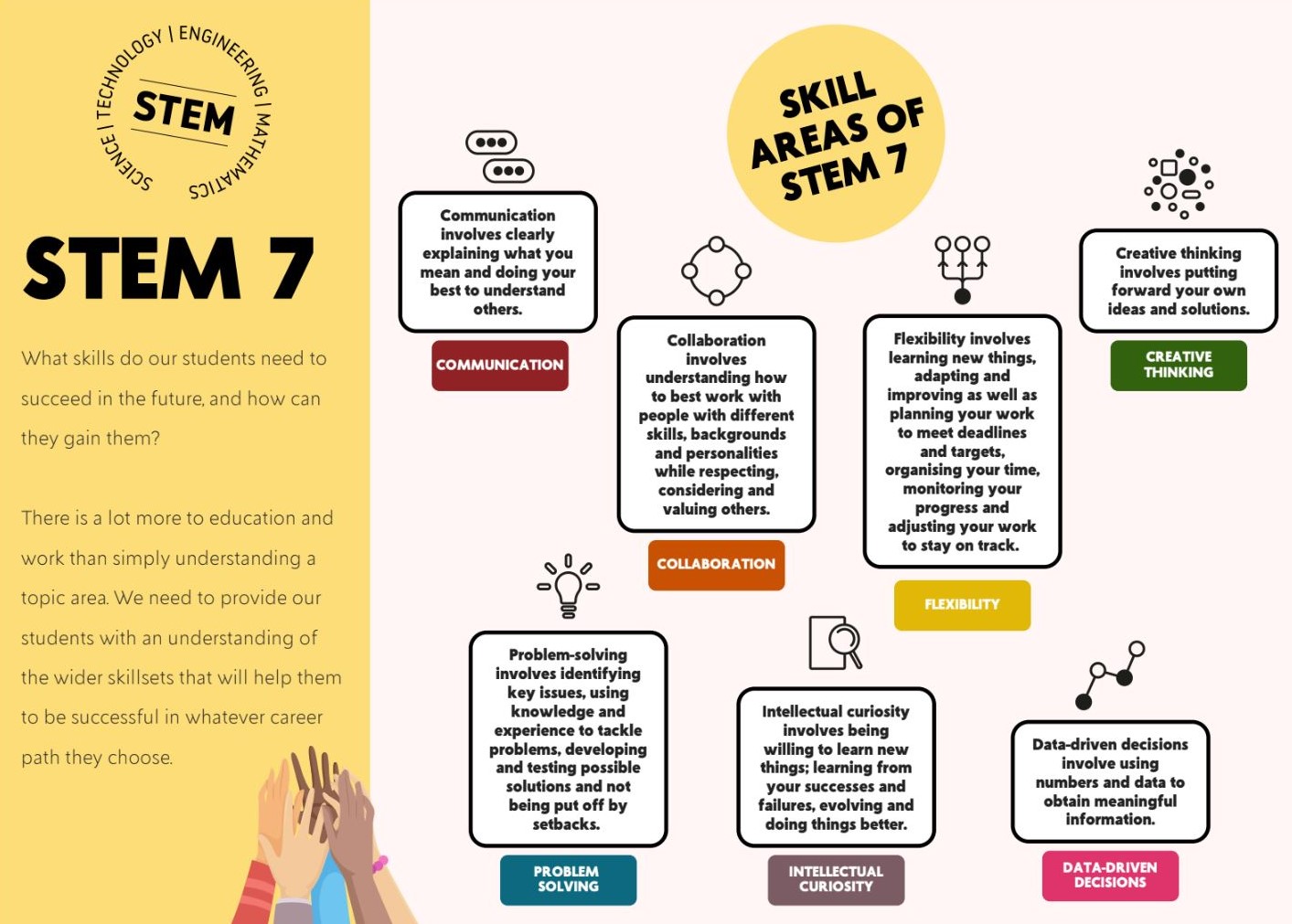
So looking through a number of documents that mapped out the key characteristics that STEM employers were looking for, we whittled them down to create what we have called STEM 7. These are the attitudes and behaviours that underpin not just the science and tech industries but all kinds of jobs, from pastry chefs to fashion designers.
A skillset that transcends boundaries
STEM 7 consists of: creative thinking, problem-solving, communication, collaborative working, intellectual curiosity, flexibility and data-driven decision making. Just about all of those concepts are actually relevant regardless of the subject. Everybody these days has to use digital technology and maths in one way or another, and if you think of the design approach and problem-solving inherent to engineering, most jobs require creativity too.
Our challenge, as educators, is to ensure our curriculum provides opportunities for students to step out of their comfort zones and take on tasks in some of those STEM 7 areas they may struggle with. Engineers, for example, are known for having many important qualities – including problem-solving and, through their design approach, creativity. But they are not traditionally renowned for their collaborative approach or communication skills, both of which are invaluable in the workplace.
That’s something our approach can help students with before they join the world of work, by stretching and developing them to ensure they have some of those transferable skills that businesses of all types really value.
And we know it’s working. We included some of our partner employers, like tech consultancy BJSS, in the first discussions about our STEM 7 strategy to make sure they were on board, and they’ve been nothing but supportive.
Opening minds
Introducing this concept has meant challenging both ourselves and our students to broaden how we think about STEM. As someone with a science background I feel strongly that many people tend to have a fear of ‘science’ and the STEM subjects, but that’s something we can and will change because it’s all around us in everything we do daily.
One key way of doing so is through revising how we teach and moving away from the thoroughly unhelpful old perspective that saw technical and artistic courses as being entirely separate. Thankfully, there is an increasing awareness that both disciplines depend on each other and share many underlying principles, not least when it comes to creativity and intellectual curiosity.
The shorthand for this new perspective is STEAM (essentially, STEM plus the Arts) and Computer Game Design and Development is a classic example of STEAM in action. We teach the subject at Leeds City College as part of our very broad offering from the School of Creative Arts, at Quarry Hill campus – and it is the epitome of a field where technical know-how and creativity are equally important.
An immersive approach
Combined with this more open-minded perspective on what actually constitutes a STEM topic is the need to exploit emerging immersive technologies like AI and VR.
Such tools can offer great benefits to our students and the industries they want to enter. If you are studying healthcare, for example, you really want to learn on a hospital ward and we can offer that; indeed it will be one of the many new facilities that Harrogate College will provide following its £22m rebuild.
What VR does though, is give you so many additional options – in this case it allows you to change ward layouts, for example, and patient scenarios so that students are exposed to a wider set of challenges and leave college with a deeper understanding of what their jobs will entail.
We are already successfully using VR in welding at Keighley College, while across our group emerging technologies are helping us enhance the teaching of everything from science to electric vehicle infrastructure.
By combining these high-tech teaching aids with a STEM 7 approach, which also delivers those in-demand ‘softer skills’, we will start to plug those STEM-shaped holes in the country’s economy.
This thought leadership piece was recently published in FE Week.