

×

Posts Tagged ‘Economic Impact’

Apprentices are the lifeblood of Yorkshire’s manufacturing sector – Kelly-Marie McAllister

Manufacturers from across Yorkshire assembled in Keighley recently to celebrate the opening of a new  apprenticeship training centre that could be key to bolstering the local industry’s fortunes.

The official opening of the Keighley College Technical Engineering Centre (TEC) represented the culmination of a shared commitment between the college, Keighley Towns Fund and Bradford Council to give our rightly celebrated manufacturing sector a shot in the arm.

Yorkshire has long been a manufacturing heartland and continues to punch well above its weight in terms of the expertise and specialisms of its firms. And here in the Keighley district, in everything from precision engineering to advanced fabrication, we are home to some of the most innovative and resilient businesses in the region.

Manufacturing is also one of our most important employment sectors, with a 2023 report by Bradford Council noting that the sector accounted for 5,000 local jobs, representing 13.5% of the workforce – significantly above the national average. 

Even in these febrile economic times, this industry is well placed to grow – but only if educators, businesses and local authorities work together to ensure the current skills gaps, which are holding it back, are tackled.

Apprenticeships, especially in advanced manufacturing and emerging technologies, will be key to achieving this. As John Harrison, Apprenticeship Manager at Fives Landis, told us at the opening: “Apprentices for us are the lifeblood of the business.” It is a sentiment that is shared by so many of our partners.

Kelly-Marie McAllister, Group Director of Apprenticeships at Luminate Education Group

So we made sure local businesses and their apprenticeship needs were at the forefront of our minds as we pulled together plans for this new engineering centre, and designed it in consultation with them. Purpose-built to train up to 120 apprentices at a time, the TEC has been kitted out with industry-standard equipment and facilities – including a full engineering workshop and future technologies lab – to equip those learners with the real-world skills the sector urgently needs.

With £3m of funding from Keighley Towns Fund, this project reflects a serious commitment to skills and growth in the area and opens at a fitting time – with our college celebrating its 200th anniversary and local manufacturing being championed by the recently re-launched Keighley Made group. The centre is also opening when there is renewed support, at governmental level, for vocational education and training.

One of the biggest challenges for the sector, however, is getting enough new skilled people to join the workforce pool each year to keep the momentum going. A recent Gi Group UK article, summing up a July 2025 Skills England report, lays out the scale of that challenge in stark terms – pointing out that currently: “Nearly 49,000 vacancies remain unfilled, with 42% of these classed as skills-shortage vacancies. This figure has risen sharply from 29% in 2017, revealing a growing gap between the skills employers need and the skills available in the labour market.”

That is why our new engineering centre in Keighley matters: it is a direct investment into our workforce and the productivity and long-term success of local businesses. It will help us get more of our young people into engaging, meaningful work while ensuring our key local businesses have access to the talent pipeline they rely on.

For employers like Ex-Pressed Steel Panels Ltd, the benefits are clear. Managing Director Michael McColgan said: “This centre allows us to recruit more apprentices and get them into college to study what we need them to learn – what manufacturers and engineers need. The biggest positive effect the centre will have on the region is that it allows local people to train local people to work locally.”

The opening of the TEC also sends out a clear, and really important, message that positive things are happening in the district – which should, in turn, attract further investment. As Chair of Keighley Towns Fund, Tim Rogers, put it: “Through skills growth, we can show investors that Keighley is a sustainable and prosperous place.” This can hopefully also inspire educators and local authorities in other areas to push for similar, potentially transformational, projects.

Manufacturing is the backbone of Keighley, and indeed much of West Yorkshire’s economy. But it’s not just our heritage – it’s our future. With initiatives like this, we are taking bold steps to ensure that its future is bright.

We’ll leave the final thoughts to one of our former apprentices – Managing Director at Fives Landis, Phil Jenkins, who trained at the college nearly quarter of a century ago. He told us: “I really think that this area has a lot to offer for manufacturing and, for me, to sustain the future of Britain we need to invest in manufacturing and industry. To see this happening in our area is a really, really great thing.”

Kelly-Marie McAllister is Group Director of Apprenticeships at Keighley College’s parent organisation, Luminate Education Group.

Park Lane Campus

Forward-thinking investment’: Luminate chief executive welcomes £10m boost for Leeds post-16 places

Luminate Education Group chief executive, Colin Booth, has described a £10 million funding boost for Leeds as a “positive development” that could help address the city’s post-16 education capacity challenges – provided it is directed towards the areas of greatest need.

The funding, announced by the Department for Education (DfE), is part of a wider £322 million package, including £302 million in college condition allocations (FECCA) for colleges across England. The investment aims to support urgent repairs and improvements to college estates – such as fixing leaking roofs and deteriorating buildings – while also responding to a nationwide increase in student numbers.

Leeds and Greater Manchester were each awarded an additional £10 million in post-16 capacity funding to help them manage a significant surge in 16 to 19 year olds expected in 2025 – 26. In Leeds, projections show this age group will continue to grow until 2030, reaching close to 30,000 young people.

Colin welcomed the announcement, saying: “Today’s announcement represents forward-thinking investment that could benefit both the local economy and young people right across the city. Over recent years, post-16 capacity constraints in Leeds have resulted in growing numbers of young people being unable to access suitable forms of post-16 education.”

The funding is designed to ensure more students can access education and training opportunities, but Colin warned that investment must be targeted carefully.

He explained that while A level provision in the city is relatively abundant – sometimes leading to competition between sixth forms – there are still major gaps in access, particularly in disadvantaged areas: “In Leeds, there is an oversupply and competition between sixth forms for A level students. But in the most disadvantaged postcodes of Leeds, fewer than half of 16 year olds are able or want to study A levels. We need to prioritise expanding capacity in high-demand courses at Levels 1 and 2, and in technical areas like health and care – where the demand from learners and employers is greatest.”

The FECCA portion of the funding will be distributed to 179 college groups across England, based on factors such as recent learning hours, space requirements by subject, and local construction costs. Colleges will have discretion over how to use the funds to improve the condition and sustainability of their buildings, with an emphasis on meeting net zero targets and energy efficiency.

While the new investment marks a significant step forward, further action is likely to be needed in other regions also facing growing pressure on post-16 places. For Leeds, Colin’s comments underscore the importance of strategic planning that aligns funding with both local need and long-term outcomes.

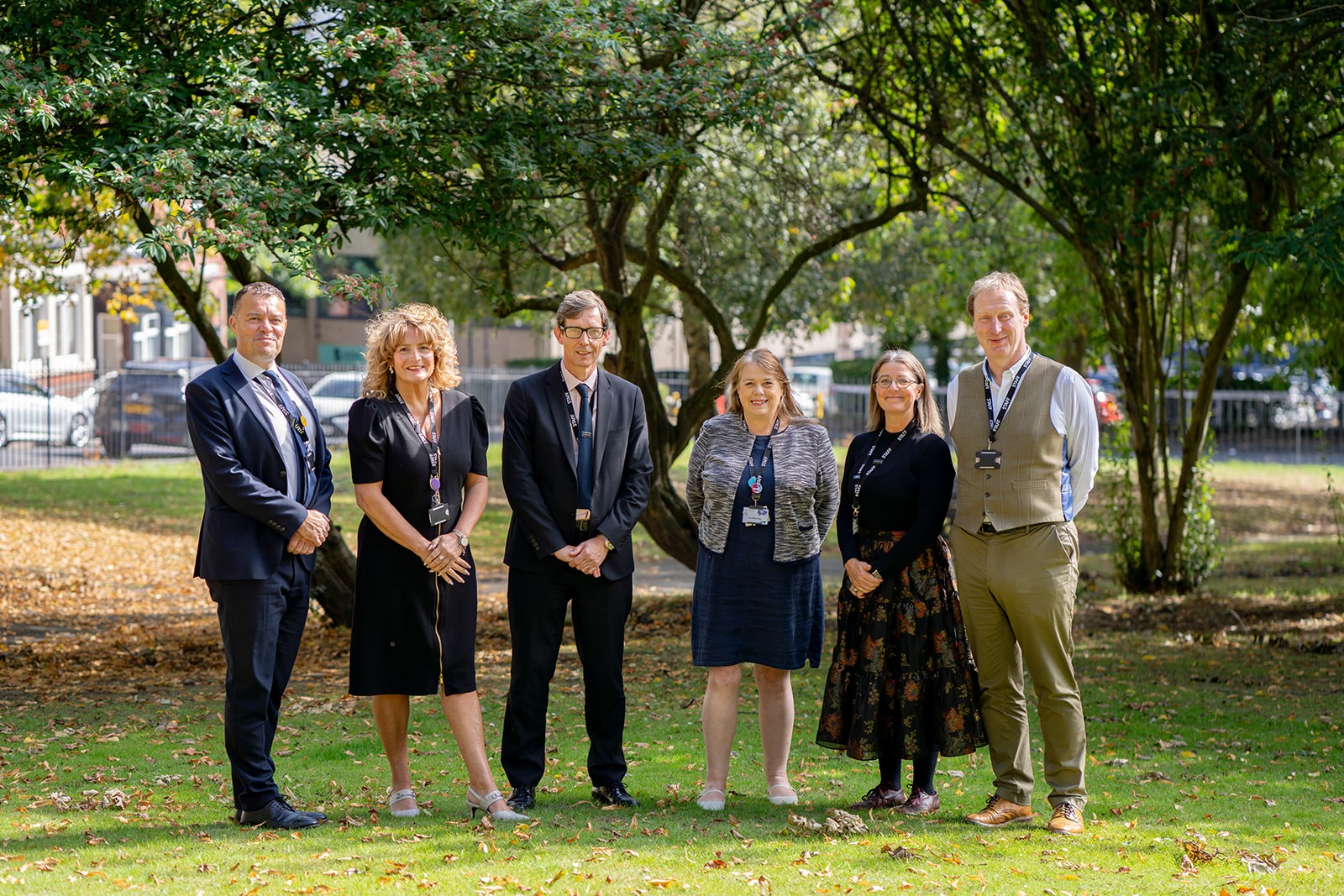
Luminate Education Group's Executive Leadership Team standing together outside on grass, in sunshine

Our assessment of the new Post-16 Education and Skills White Paper

The government has published a set of wide-ranging new proposals for further and higher education.

The White Paper includes plans to introduce new technical qualifications, V Levels, and implement a more targeted, data-driven approach to plugging skills gaps in key areas.

There are also proposals to provide greater intervention and support for young people not in education or employment (NEET), and to raise annual university fees automatically, linked to inflation.

Our senior leaders have been carefully analysing each of the report’s main points to weigh up their merits and see what the implications are likely to be for our members.

Matching skills to industry

On labour market alignment, Bill Jones, our CEO Designate and Executive Principal Leeds City College, said: “A skills system that more closely connects education and employment into priority sectors is long overdue.

“Skills England’s national coordination, combined with devolved local planning, could maximise the role of skills as a genuine engine of economic growth, but only if colleges are effectively resourced to deliver and respond quickly to changing demand.”

Recruitment plans

Turning to FE teacher recruitment, he added: “Recruiting and retaining specialist FE teachers remains one of the greatest challenges facing further education.

“The proposals for professional development and industry exchange are welcome, but they must be matched by a funding settlement that allows colleges to offer competitive pay. Without tackling that gap, we risk losing the expertise that an ambitious and effective skills system depends on.”

Action on NEETs

On reducing NEET rates, group CEO Colin Booth said: “We welcome the commitment to make sure no young person is left without a place in education or training.

“But that ambition won’t be achieved unless post-16 capacity keeps pace with demand. Across Leeds and in many other cities, colleges are already at maximum capacity, and the number of 16-to-18-year-olds is still rising.

“The Youth Guarantee, the automatic allocation of college places and improved data sharing on learners at risk of becoming NEET are all positive steps forward, as is the strengthened role of secondary schools in supportive effective transitions into post-16 education. Without sustained investment into teaching space, staffing and support services, however, we risk seeing more young people left without a suitable place to learn.”

Qualification reforms and V Levels

On V Levels and qualification reform our Deputy CEO, Gemma Simmons-Blench, said: “Clarity and consistency in qualifications will help students, employers and providers alike.

“The move toward a smaller suite of high-quality Level 3 routes, including V Levels, is sensible, provided it protects progression opportunities and recognises the diverse needs of learners. Level 3 qualifications in scope for defunding should only be removed when a similarly accessible alternative is in place. Reform should simplify and enhance choice, not narrow it.”

Funding formula ‘must recognise realities’

On the review of the 16-19 funding formula, Gemma added: “A review of the 16-19 funding formula is long overdue.

“Colleges are educating record numbers of young people on funding levels that simply haven’t kept pace with inflation, pay pressures, or the growing complexity of learner needs. The current formula doesn’t reflect the higher delivery costs of technical programmes, industry placements or support for SEND learners.

“If the Government wants the post-16 education and skills system reform agenda to succeed, the updated formula must recognise the real cost of delivering high-quality education and provide the stability for greater flexibility and planning.”

More details needed on English and maths shake-up

She also had these reflections on the proposed English and maths reforms: “It’s right that the Government wants every learner to leave education with solid English and maths skills that provide the foundation for employability.

“It’s extremely positive that the Government have recognised the issues that face further education providers, but the detail behind the proposed new Level 1 qualification will be crucial. We need to understand how it will differ from existing functional skills, which learners it will be available to, what progression routes it will support, and how it will be funded and assessed.

“We also need to know whether this new qualification will be ring-fenced for post-16 students or accessible at an earlier age, as is the case with functional skills.

“Alongside these reforms, it would also be extremely beneficial for dedicated post-16 GCSE English and maths papers to be introduced, built specifically for resit students. Colleges deliver the bulk of this provision, so getting the structure and resourcing right will determine whether the reform genuinely raises attainment or simply rebrands what already exists.”

Apprenticeships at the Heart of Regional Growth

This year, Luminate Education Group, which runs a number of colleges and high education institutions across Yorkshire, is proud to relaunch our 100 in 100 campaign. The aim is to secure 100 new apprenticeships in just 100 days. Previously, this initiative has connected dozens of young people with meaningful career opportunities, and given over 100 employers the skilled support they needed to grow.

The impact was clear. Apprentices gained confidence, qualifications, and a future. Employers gained motivated team members who made a difference from day one. And, crucially, it helped address some of the gaps in priority sectors such as health and social care, education, and manufacturing – three of the region’s largest employers.

Across Yorkshire, employers are facing a familiar challenge: finding and developing the skilled workers they need to grow and thrive. 

Only 0.3% of people in our region hold a trade apprenticeship qualification – a strikingly low figure given the scale of workforce demand. That’s why apprenticeships are more important than ever: they’re one of the most practical ways for businesses to grow their own skilled talent, while giving local people access to sustainable, rewarding careers.

As I step into my new role as Group Head of Business Development at Luminate, I’m focused on strengthening apprenticeship opportunities across West and North Yorkshire – making sure they work as well as possible for both learners and employers.

Every week, I hear stories from both employers and apprentices about the positive impact of apprenticeships. Apprentices are taking on new responsibilities, often moving into leadership roles, and regularly progressing onto higher-level qualifications. We’re building a thriving alumni community that demonstrates the long-term value apprenticeships can deliver.

At Keighley College, which celebrates its 200-year anniversary this year, we’ve run successful apprenticeships with local employers since the 1950s. Many of those early apprentices went on to play pivotal roles in their sectors – from manufacturing and skilled trades, which still employ tens of thousands locally, to professional and technical roles that are now among the region’s fastest-growing.

That idea of “see it to be it” really matters. The best way to inspire someone to take up an apprenticeship is to let them hear directly from those who have already benefited. Recently, for example, Roger Page – a former Keighley College apprentice who went on to build a successful career in aviation – returned to share his story with current apprentices. Hearing directly from someone who started where they are now, and who has gone on to achieve so much, shows what’s possible.

By Clare Fitzgerald, Group Head of Business Development at Luminate Education Group

Website designed and built by Web Phizix