

×

Author Archive

Leading the Apprenticeship Charge: Kelly Marie McAllister on Opportunity, Skills, and Ambition at Luminate Education Group

As businesses across Yorkshire grapple with widening skills gaps and the need to build future-ready workforces, apprenticeships are once again taking centre stage. At the heart of this is Kelly Marie McAllister, recently appointed Group Director of Apprenticeships at Luminate Education Group – one of the largest college groups in the UK.

With 16 years of experience in further education and apprenticeships, Kelly joined Luminate with a clear ambition: to drive growth, enhance quality, and ensure apprenticeship delivery meets the needs of both learners and industry – locally, regionally and nationally.

“I was ready to take the knowledge and expertise I had developed over my career and put it into practice on a larger scale,” says Kelly. “Luminate is the fourth largest college group in the country, and the opportunity to help shape its apprenticeship strategy genuinely excited me.”

A Vision Built on Experience

Kelly’s experience in the sector has been a powerful influence on her leadership style. Her ethos centres on being a “positive disruptor” – using her platform not only to shape apprenticeship strategy but also to widen participation, drive innovation, and advocate for long-lasting change.

“My experience has given me the confidence to use my voice. I’m passionate about providing life-changing opportunities for those entering apprenticeships – and also for those working within the sector,” she explains.

Now in post, she has quickly established a clear set of priorities: growth, quality, culture and reputation. One of her first actions has been to strengthen Luminate’s team of apprenticeship specialists across both employer engagement and teaching and assessment. But just as crucial is the work she’s leading externally.

“We’re developing new and exciting networks regionally and nationally for both employers and apprenticeship specialists. Collaboration is key if we’re serious about tackling shared challenges around skills.”

Addressing the Region’s Skills Needs

Luminate’s apprenticeship provision has a broad footprint, including Leeds City College, Harrogate College and Keighley College – each with its own local identity and employer needs. Kelly is acutely aware of how critical it is to align apprenticeship delivery with those local priorities.

“We’re seeing acute shortages in sectors like construction, engineering and manufacturing, and health and care,” she says. “These are being exacerbated by a lack of qualified tutors leaving industry for teaching roles in FE. That’s why employer collaboration is so important – so we can share their expertise with the next generation, their future workforce.”

As part of her strategic approach, Kelly is keen to balance national data with real-world employer insight. She values the recent creation of Skills England, which is set to provide national direction, but believes that on-the-ground engagement is just as vital.

“I’m passionate about developing a destination-led curriculum. Skills England and labour market data give us the headlines, but meeting directly with local employers – from microbusinesses to SMEs and large levy payers – gives us the context. You need both to make informed decisions.”

Evolving How Apprenticeships Are Delivered

Internally, Kelly is also rethinking how the Group engages with employers through redesigned Employer Boards. The aim is to deepen partnership working and ensure feedback directly informs curriculum development and delivery. At a time when employer participation is often a limiting factor in the number of apprenticeships taking place, strong collaboration can ensure that the number of apprenticeships on offer more closely meets demand. 

“We’ve updated our terms of reference and are really driving forward the idea of collaboration across the group. It’s about co-creation – building pathways that work for businesses as well as learners.”

This evolution is particularly relevant as apprenticeships continue to shift in public perception. Kelly believes strongly in reframing the apprenticeship offer – not as a second-choice alternative to university, but as a high-quality, sought after route that takes learners directly into the workplace, or even to degree level and beyond.

She’s also focused on inclusivity – ensuring that apprenticeship opportunities reach underrepresented communities and learners who might otherwise miss out.

Looking Ahead

Kelly’s long-term vision for apprenticeships at Luminate is ambitious, but it’s rooted in a strong belief in the power of collaboration and civic responsibility.

“We’re not just here to respond to employer needs – we want to lead. Apprenticeships should be transformative for individuals, businesses, and entire communities.”

As Yorkshire and the UK continue to invest in skills and growth, leaders like Kelly are ensuring that apprenticeship delivery is more than reactive – it’s strategic, collaborative and future-facing.
Continuing to make a difference in our community

Across our group, learners and staff are making a meaningful impact through social action projects that build skills, confidence, and a strong sense of civic responsibility.

At North Street, beginner English for Speakers of Other Languages (ESOL) students transformed an unused outdoor space into the Garden of Sanctuary, working with local professionals to create planters, benches, murals, and bird boxes. The project strengthened science, technology, engineering and maths (STEM) skills along with language, and teamwork skills.

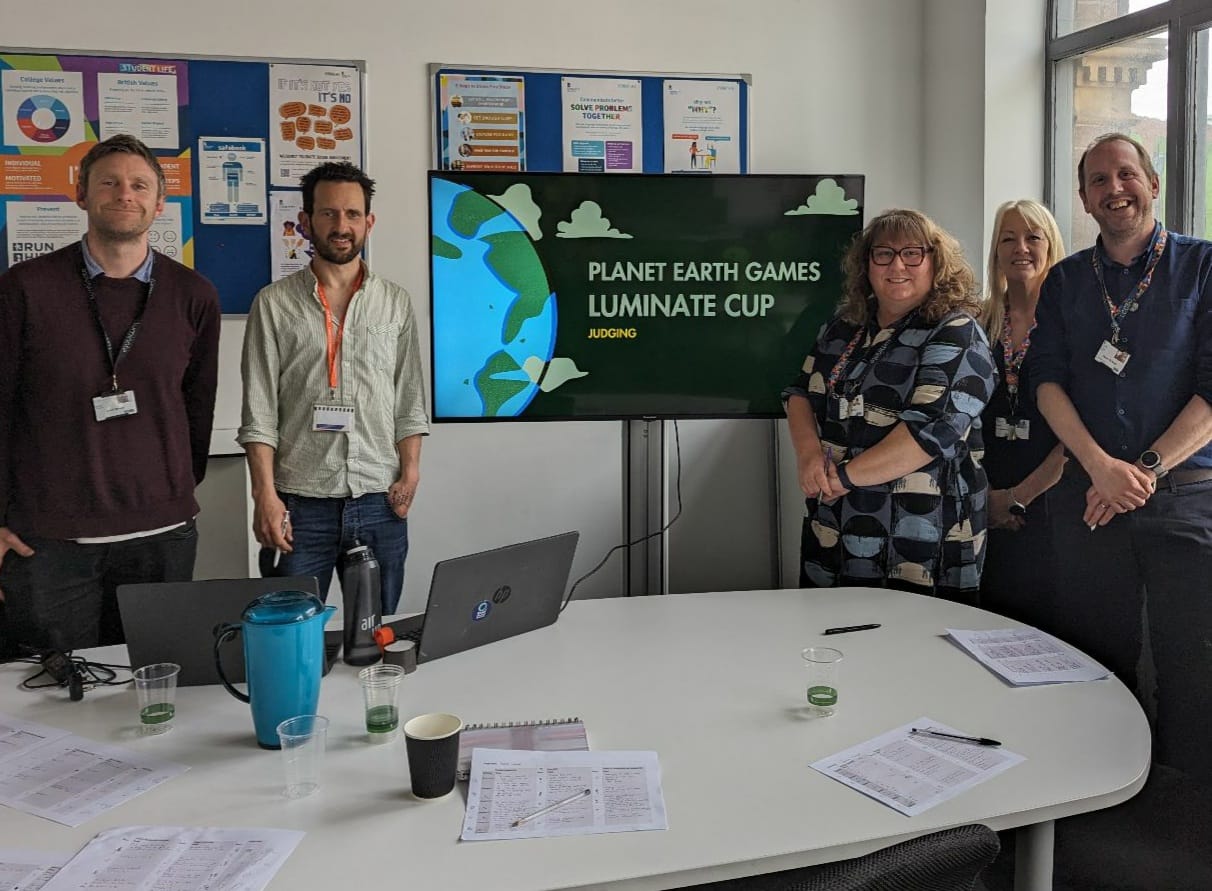
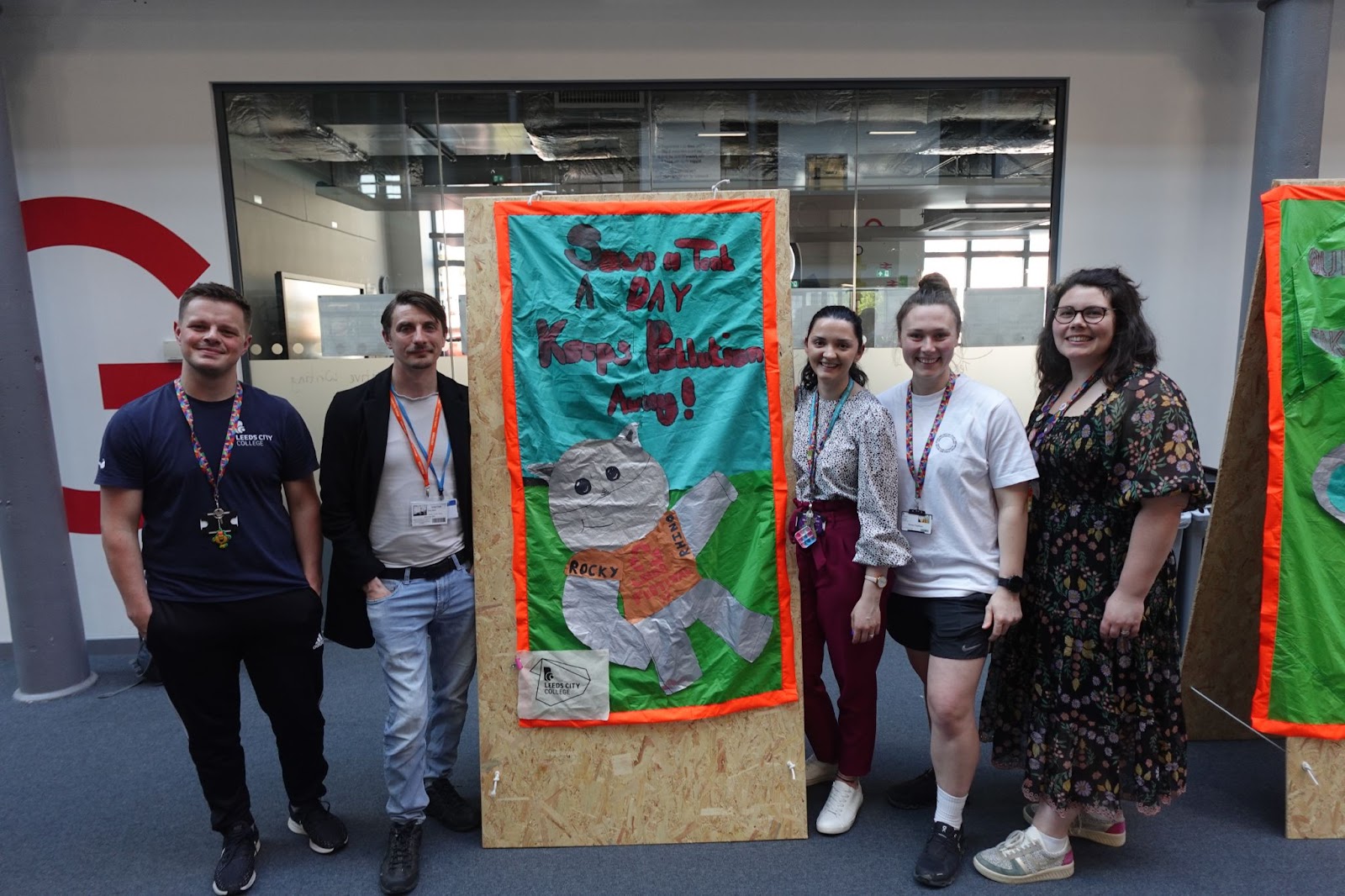
Environmental action has also been a major focus. Through Planet Earth Games, around 280 students took part in sustainability projects, helping the group place 5th nationally. Highlights included upcycling waste into wildlife homes at Quarry Hill campus, pollution awareness campaigns by Creative Media students, and a winning recycling initiative by turning crisp packets into blankets for the homeless.

Creative Arts students contributed to community safety by producing the Ask for Angela training video in partnership with Women Friendly Leeds – now being shared with more than 600 venues across the city. At Leeds Sixth Form College, learners supported Friends of the Earth campaigns, raised funds for the Junior Sports Hub, and petitioned for improved prayer spaces, strengthening leadership and advocacy skills.

Social responsibility was also championed at Printworks campus, where students upcycled tents from Leeds Festival with TOM-O, who transforms pre-loved materials into unique, handmade fashion for all sizes and genders. Students also delivered Kindness Week, raising money for Great Ormond Street Hospital, supporting food banks, and creating kindness walls across campus.

And through our Shape Up 4 Surgery project – delivered with the NHS – Nutrition students designed digital recipe cards to help patients prepare for surgery, contributing to better wellbeing across Leeds Teaching Hospitals.

Together, these projects highlight how our learners are not only developing their own potential, but also making a positive and lasting difference in the communities we serve.

Future Culinary Stars Shine in ‘Chef of the Year’ Cook-off at Harrogate College

Harrogate College’s hospitality students played a key supporting role in a high-pressure cook-off that saw four of the town’s most promising chefs compete for the prestigious Chef of the Year title.

Part of the 2025 Harrogate Hospitality & Tourism Awards (HHTA), the event was held in the college’s professional-standard training kitchens and gave Harrogate College’s hospitality students the opportunity to support the event through logistics and food preparation.

They worked closely with the competitors – observing, assisting, and learning from the region’s culinary elite – gaining valuable insight into real world culinary environments.

The finalists were challenged to create two standout dishes – a refined amuse-bouche and an impressive main course – under the watchful eyes of industry judges and with just 90 minutes on the clock.

Adding to the challenge, the chefs had to work from a mystery box of ingredients revealed on the day, using only equipment provided on-site, with the exception of one personal item. To ensure a fair judging process, the competition was carried out blind, with dishes delivered to the judging panel anonymously.

Danny Wild, Principal of Harrogate College, said: “We were absolutely delighted to host this year’s Chef of the Year cook-off. Not only was it a fantastic showcase of local culinary talent, but it also gave our students the chance to see the very best of the industry in action – right here on campus. Supporting the next generation of chefs and helping to raise the profile of hospitality in Harrogate is something we’re very proud to be part of.”

The event, designed to shine a spotlight on the exceptional hospitality talent in the region, forms part of the lead-up to the main awards evening on Monday 2 June, where the overall winner will be announced.

Tom Gordon, MP for Harrogate and Knaresborough and an advocate for the town’s famous hospitality and tourism sector, said: “Events like these provide a brilliant way to celebrate and champion the vital role hospitality plays in our local economy. The culinary skill and creativity on show is truly inspiring, and it’s great to see Harrogate College playing a central role in nurturing future talent.”

Harrogate’s Hospitality and Tourism Awards have been running now for 17 years to celebrate the best of the best that the town has to offer. With hospitality representing a central feature within Harrogate’s economy, these awards capture the imagination of all who work directly or indirectly in hospitality and tourism, as well as many of the general public who use the many bars, restaurants, hotels, cafes and other supporting attractions.

Simon Cotton, Organiser of Harrogate Hospitality & Tourism Awards, said: “The Chef of the Year is one of the most prestigious of the 12 categories in the awards and is a very much sought-after accolade. Several years ago, with the help of Harrogate College, the competition stepped up a significant level, with the introduction of a blind cook-off in the college’s catering kitchens.

“Working with Harrogate College is an absolute pleasure and it is fantastic that their young student chefs work alongside the competitor chefs helping develop their own skills and hopefully inspiring the next generation.”

The cook-off highlighted the creativity, technical skill and passion that exist within Harrogate’s hospitality scene – offering a taste of what’s to come at the Harrogate Hospitality & Tourism Awards in June.

Park Lane Campus

Forward-thinking investment’: Luminate chief executive welcomes £10m boost for Leeds post-16 places

Luminate Education Group chief executive, Colin Booth, has described a £10 million funding boost for Leeds as a “positive development” that could help address the city’s post-16 education capacity challenges – provided it is directed towards the areas of greatest need.

The funding, announced by the Department for Education (DfE), is part of a wider £322 million package, including £302 million in college condition allocations (FECCA) for colleges across England. The investment aims to support urgent repairs and improvements to college estates – such as fixing leaking roofs and deteriorating buildings – while also responding to a nationwide increase in student numbers.

Leeds and Greater Manchester were each awarded an additional £10 million in post-16 capacity funding to help them manage a significant surge in 16 to 19 year olds expected in 2025 – 26. In Leeds, projections show this age group will continue to grow until 2030, reaching close to 30,000 young people.

Colin welcomed the announcement, saying: “Today’s announcement represents forward-thinking investment that could benefit both the local economy and young people right across the city. Over recent years, post-16 capacity constraints in Leeds have resulted in growing numbers of young people being unable to access suitable forms of post-16 education.”

The funding is designed to ensure more students can access education and training opportunities, but Colin warned that investment must be targeted carefully.

He explained that while A level provision in the city is relatively abundant – sometimes leading to competition between sixth forms – there are still major gaps in access, particularly in disadvantaged areas: “In Leeds, there is an oversupply and competition between sixth forms for A level students. But in the most disadvantaged postcodes of Leeds, fewer than half of 16 year olds are able or want to study A levels. We need to prioritise expanding capacity in high-demand courses at Levels 1 and 2, and in technical areas like health and care – where the demand from learners and employers is greatest.”

The FECCA portion of the funding will be distributed to 179 college groups across England, based on factors such as recent learning hours, space requirements by subject, and local construction costs. Colleges will have discretion over how to use the funds to improve the condition and sustainability of their buildings, with an emphasis on meeting net zero targets and energy efficiency.

While the new investment marks a significant step forward, further action is likely to be needed in other regions also facing growing pressure on post-16 places. For Leeds, Colin’s comments underscore the importance of strategic planning that aligns funding with both local need and long-term outcomes.

Recognising and supporting our Working Carers

In Leeds alone, it’s estimated that over 74,000 people are unpaid carers for a family member or friend due to illness, disability, mental health challenges or substance misuse. That’s nearly 10% of the city’s population. Yet many people don’t identify as a ‘Working Carer’ – and as a result, may not access the support they are legally entitled to.

This isn’t just a Leeds issue. The picture is similar in towns and cities across the UK, including Harrogate and Keighley. It’s likely that many individuals across the communities we serve are balancing caring responsibilities with careers, education, or training – often without recognition or formal support.

Being a Working Carer can have a profound impact on a person’s physical and mental wellbeing, relationships, and opportunities for career progression. It can lead to stress, burnout, and isolation – especially when regular working patterns or social activities become difficult to maintain.

At Luminate Education Group, we’re committed to building carer-friendly environments that recognise these challenges and offer meaningful support. This includes flexible working arrangements, access to wellbeing resources, and spaces for peer connection and advocacy.

A key initiative is our Working Carers Forum, chaired by Mariam Kauser, EDI Manager at Leeds Conservatoire. The forum provides a platform for Working Carers to connect, share experiences and shape inclusive workplace policies.

Mariam explains:

“My vision is for a culture where no one feels they must choose between being a carer and being a valued professional. This forum exists to connect, support, and drive meaningful change – ensuring lived experience informs policy and carers’ voices are heard, however quietly they speak.”

The recent introduction of the Carer’s Leave Act (2023), which came into effect in 2024, marks an important step forward. Under this new legislation, employees across the UK can take up to one week of unpaid leave each year to care for a dependent – a statutory right that helps Working Carers manage their responsibilities more effectively.

We’re proud to be part of a wider regional effort to raise awareness, promote resources, and advocate for more compassionate workplaces. Whether you’re an employer, a community organisation, or someone with caring responsibilities, we all have a role to play in ensuring carers feel supported, seen, and valued.

For more information about our initiatives or to connect with the Working Carers Forum, please get in touch.

Colin Booth OBE announces retirement

The Chief Executive of Luminate Education Group, Colin Booth OBE, is retiring after 40 years in the education sector.

Colin will continue in his role as Luminate’s Chief Executive until December and will support the transition of his successor once they’re appointed in the next couple of months.

Throughout his career, Colin has transformed the lives of thousands of students through the creation of consistently high-quality education and training provision.

Luminate Education Group has grown significantly during Colin’s tenure; he has ensured members of the group are financially healthy, high quality and innovative institutions that meet regional and national skills needs.

A particular focus of Colin’s work over recent years has been ensuring that young people in Leeds have access to suitable forms of post-16 education. Alongside an over-abundance of academic post-16 options across the city, Colin has long highlighted capacity concerns around delivering the scale of vocational education that Leeds requires.

He said: “I’m incredibly proud of everything we have achieved together at Luminate as a team of staff and leaders and together with all of our key partners.

“Our collective efforts have not only ensured the continued success of our institutions but have also had a profound impact on the communities we serve.”

John Toon, Luminate Education Group’s Chair of Governors, added: “Personally, it has been my pleasure and a privilege to work closely with Colin over the last eight years.

“He has raised expectations around innovation and excellence and has driven teams to exceed expectations, improving the financial and quality performance of all organisations he has worked for.”

The advert for the new CEO is out now and will close on 5 May. Click here to see the advert.

Website designed and built by Web Phizix