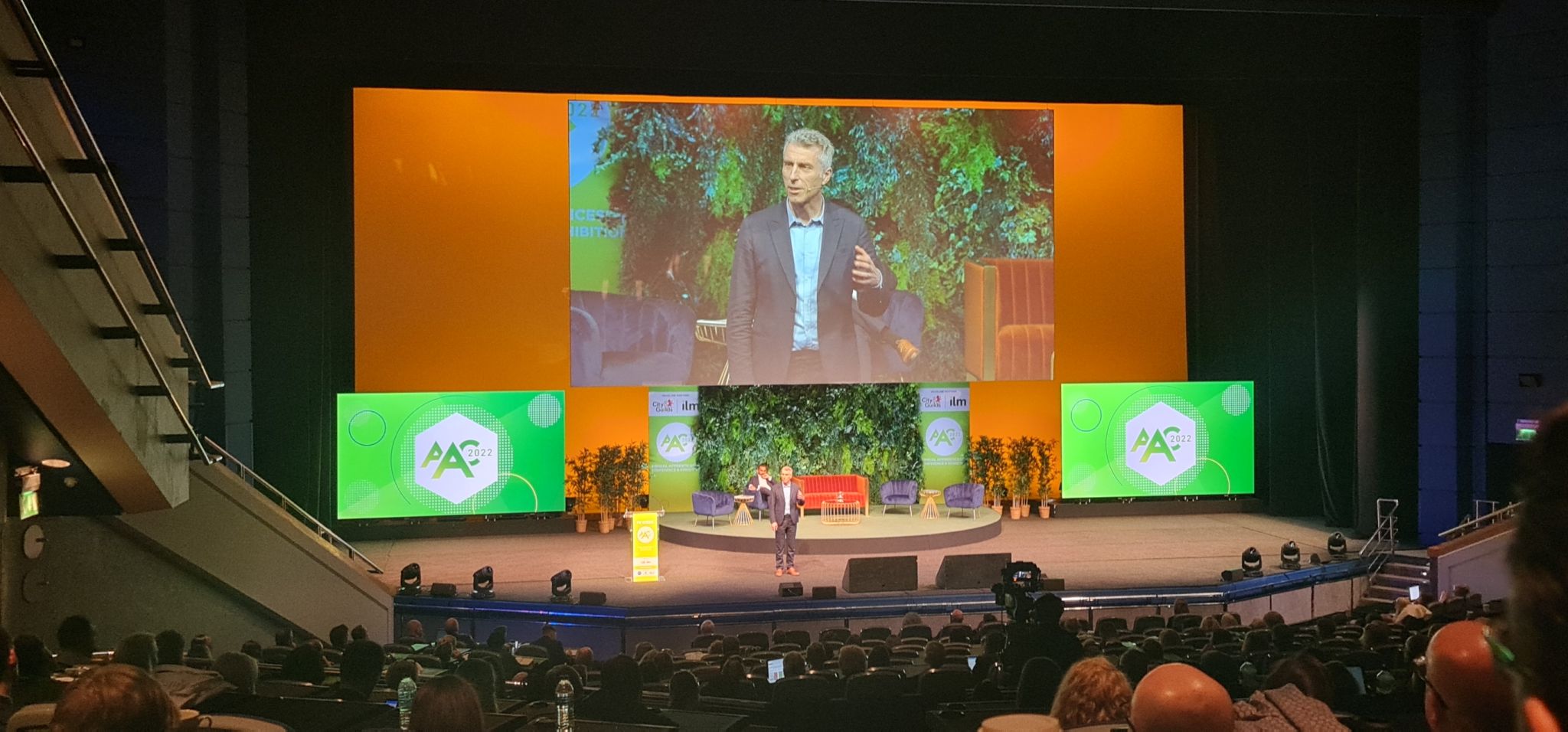
Kelly McAllister, Group Head of Apprenticeships at Luminate Education Group
Our health and social care system stands at a crossroads. In the midst of a growing workforce crisis, shaped by an ageing population, an ageing workforce, and chronic staff shortages in hospitals, community services and support settings face unsustainable strains. It is clear to me that if we don’t place apprenticeships at the heart of our health and social care workforce strategy, this crisis will only deepen.
The scale of the challenge is stark. Across the NHS and adult social care, vacancy rates have remained alarmingly high for some time. In England there are more than 110,000 NHS vacancies, excluding primary care roles, and over 150,000 unfilled adult social care posts These rates are far higher than the wider job market average.
This pressure is compounded by demographic shifts. The NHS Long Term Workforce Plan shows the number of people aged over 85 – the group most likely to need intensive health and care support – will grow by more than 50% by 2037, with a projected shortfall of up to 360,000 staff by the mid-2030s if action isn’t taken.
Yet despite this, more people leave the sector each year than join it. Many young people and career-changers are unaware of the breadth of rewarding roles available beyond traditional clinical pathways. Meanwhile, employers struggle to attract talent into health and care occupations, and the non-regulated care workforce suffers both low qualification levels and high turnover.
Apprenticeships must be part of the solution
Apprenticeships offer earn-while-you-learn routes into the workforce that are accessible and practical. They attract new entrants who might not otherwise consider a career in health and care, providing real-world experience alongside recognised qualifications.
Employers benefit too. Due to the nature of apprenticeships, apprentices are motivated to learn, can be developed in line with organisational needs, and are more likely to stay with their employer on completion of their programme.This all helps to build a workforce that is job-ready and resilient.
And we’re seeing that employers value this route into health and care roles. In the NHS, the number of clinical and non-clinical apprenticeship standards has more than doubled in the last decade.
At Luminate Education Group, a Yorkshire-based education group that includes Leeds City College, Harrogate College and Keighley College, we work closely with NHS partners including Leeds Teaching Hospitals NHS Trust, Great Ormond Street Hospital and Bradford Royal Infirmary. Our apprenticeships span Level 2 to Level 5 and cover a broad range of clinical and support roles, with clear progression routes that help individuals build lifelong careers.
Investing in our young people to support an ageing population
National Apprenticeship Week, held between 9 and 15 February, is a chance to challenge misconceptions about careers in health and social care. Too often, apprenticeships are viewed as a secondary option to university for breaking into the health and care sector. In reality, they provide an effective and practical route into meaningful, long-term careers that sustain our most vital public services.
But these opportunities need continued investment. Without sustained support for high-quality apprenticeship provision, the workforce gaps in health and social care will continue to widen, putting services under further strain and compromising care for our most vulnerable.
Solving the health and social care workforce crisis will require bold thinking, collaboration across sectors and a renewed commitment to the people who deliver care every day. Apprenticeships should not be a peripheral part of that solution, they must be central to it.
As businesses across Yorkshire grapple with widening skills gaps and the need to build future-ready workforces, apprenticeships are once again taking centre stage. At the heart of this is Kelly Marie McAllister, recently appointed Group Director of Apprenticeships at Luminate Education Group – one of the largest college groups in the UK.
With 16 years of experience in further education and apprenticeships, Kelly joined Luminate with a clear ambition: to drive growth, enhance quality, and ensure apprenticeship delivery meets the needs of both learners and industry – locally, regionally and nationally.
“I was ready to take the knowledge and expertise I had developed over my career and put it into practice on a larger scale,” says Kelly. “Luminate is the fourth largest college group in the country, and the opportunity to help shape its apprenticeship strategy genuinely excited me.”
A Vision Built on Experience
Kelly’s experience in the sector has been a powerful influence on her leadership style. Her ethos centres on being a “positive disruptor” – using her platform not only to shape apprenticeship strategy but also to widen participation, drive innovation, and advocate for long-lasting change.
“My experience has given me the confidence to use my voice. I’m passionate about providing life-changing opportunities for those entering apprenticeships – and also for those working within the sector,” she explains.
Now in post, she has quickly established a clear set of priorities: growth, quality, culture and reputation. One of her first actions has been to strengthen Luminate’s team of apprenticeship specialists across both employer engagement and teaching and assessment. But just as crucial is the work she’s leading externally.
“We’re developing new and exciting networks regionally and nationally for both employers and apprenticeship specialists. Collaboration is key if we’re serious about tackling shared challenges around skills.”
Addressing the Region’s Skills Needs
Luminate’s apprenticeship provision has a broad footprint, including Leeds City College, Harrogate College and Keighley College – each with its own local identity and employer needs. Kelly is acutely aware of how critical it is to align apprenticeship delivery with those local priorities.
“We’re seeing acute shortages in sectors like construction, engineering and manufacturing, and health and care,” she says. “These are being exacerbated by a lack of qualified tutors leaving industry for teaching roles in FE. That’s why employer collaboration is so important – so we can share their expertise with the next generation, their future workforce.”
As part of her strategic approach, Kelly is keen to balance national data with real-world employer insight. She values the recent creation of Skills England, which is set to provide national direction, but believes that on-the-ground engagement is just as vital.
“I’m passionate about developing a destination-led curriculum. Skills England and labour market data give us the headlines, but meeting directly with local employers – from microbusinesses to SMEs and large levy payers – gives us the context. You need both to make informed decisions.”
Evolving How Apprenticeships Are Delivered
Internally, Kelly is also rethinking how the Group engages with employers through redesigned Employer Boards. The aim is to deepen partnership working and ensure feedback directly informs curriculum development and delivery. At a time when employer participation is often a limiting factor in the number of apprenticeships taking place, strong collaboration can ensure that the number of apprenticeships on offer more closely meets demand.
“We’ve updated our terms of reference and are really driving forward the idea of collaboration across the group. It’s about co-creation – building pathways that work for businesses as well as learners.”
This evolution is particularly relevant as apprenticeships continue to shift in public perception. Kelly believes strongly in reframing the apprenticeship offer – not as a second-choice alternative to university, but as a high-quality, sought after route that takes learners directly into the workplace, or even to degree level and beyond.
She’s also focused on inclusivity – ensuring that apprenticeship opportunities reach underrepresented communities and learners who might otherwise miss out.
Looking Ahead
Kelly’s long-term vision for apprenticeships at Luminate is ambitious, but it’s rooted in a strong belief in the power of collaboration and civic responsibility.
“We’re not just here to respond to employer needs – we want to lead. Apprenticeships should be transformative for individuals, businesses, and entire communities.”
As Yorkshire and the UK continue to invest in skills and growth, leaders like Kelly are ensuring that apprenticeship delivery is more than reactive – it’s strategic, collaborative and future-facing.
Manufacturers from across Yorkshire assembled in Keighley recently to celebrate the opening of a new apprenticeship training centre that could be key to bolstering the local industry’s fortunes.
The official opening of the Keighley College Technical Engineering Centre (TEC) represented the culmination of a shared commitment between the college, Keighley Towns Fund and Bradford Council to give our rightly celebrated manufacturing sector a shot in the arm.
Yorkshire has long been a manufacturing heartland and continues to punch well above its weight in terms of the expertise and specialisms of its firms. And here in the Keighley district, in everything from precision engineering to advanced fabrication, we are home to some of the most innovative and resilient businesses in the region.
Manufacturing is also one of our most important employment sectors, with a 2023 report by Bradford Council noting that the sector accounted for 5,000 local jobs, representing 13.5% of the workforce – significantly above the national average.
Even in these febrile economic times, this industry is well placed to grow – but only if educators, businesses and local authorities work together to ensure the current skills gaps, which are holding it back, are tackled.
Apprenticeships, especially in advanced manufacturing and emerging technologies, will be key to achieving this. As John Harrison, Apprenticeship Manager at Fives Landis, told us at the opening: “Apprentices for us are the lifeblood of the business.” It is a sentiment that is shared by so many of our partners.
Kelly-Marie McAllister, Group Director of Apprenticeships at Luminate Education Group
So we made sure local businesses and their apprenticeship needs were at the forefront of our minds as we pulled together plans for this new engineering centre, and designed it in consultation with them. Purpose-built to train up to 120 apprentices at a time, the TEC has been kitted out with industry-standard equipment and facilities – including a full engineering workshop and future technologies lab – to equip those learners with the real-world skills the sector urgently needs.
With £3m of funding from Keighley Towns Fund, this project reflects a serious commitment to skills and growth in the area and opens at a fitting time – with our college celebrating its 200th anniversary and local manufacturing being championed by the recently re-launched Keighley Made group. The centre is also opening when there is renewed support, at governmental level, for vocational education and training.
One of the biggest challenges for the sector, however, is getting enough new skilled people to join the workforce pool each year to keep the momentum going. A recent Gi Group UK article, summing up a July 2025 Skills England report, lays out the scale of that challenge in stark terms – pointing out that currently: “Nearly 49,000 vacancies remain unfilled, with 42% of these classed as skills-shortage vacancies. This figure has risen sharply from 29% in 2017, revealing a growing gap between the skills employers need and the skills available in the labour market.”
That is why our new engineering centre in Keighley matters: it is a direct investment into our workforce and the productivity and long-term success of local businesses. It will help us get more of our young people into engaging, meaningful work while ensuring our key local businesses have access to the talent pipeline they rely on.
For employers like Ex-Pressed Steel Panels Ltd, the benefits are clear. Managing Director Michael McColgan said: “This centre allows us to recruit more apprentices and get them into college to study what we need them to learn – what manufacturers and engineers need. The biggest positive effect the centre will have on the region is that it allows local people to train local people to work locally.”
The opening of the TEC also sends out a clear, and really important, message that positive things are happening in the district – which should, in turn, attract further investment. As Chair of Keighley Towns Fund, Tim Rogers, put it: “Through skills growth, we can show investors that Keighley is a sustainable and prosperous place.” This can hopefully also inspire educators and local authorities in other areas to push for similar, potentially transformational, projects.
Manufacturing is the backbone of Keighley, and indeed much of West Yorkshire’s economy. But it’s not just our heritage – it’s our future. With initiatives like this, we are taking bold steps to ensure that its future is bright.
We’ll leave the final thoughts to one of our former apprentices – Managing Director at Fives Landis, Phil Jenkins, who trained at the college nearly quarter of a century ago. He told us: “I really think that this area has a lot to offer for manufacturing and, for me, to sustain the future of Britain we need to invest in manufacturing and industry. To see this happening in our area is a really, really great thing.”
Kelly-Marie McAllister is Group Director of Apprenticeships at Keighley College’s parent organisation, Luminate Education Group.
The Skills Minister has attended the launch of a ‘groundbreaking’ scheme in Yorkshire to mark National Apprenticeship Week.
Leeds City College and IT company Redcentric have been working with Leeds Rhinos to design an IT sales apprenticeship aimed at their athletes of all genders and abilities.
The arrangement gives professional and amateur athletes access to a world-class training programme while guaranteeing them employment in the UK’s IT services sector – effectively offering the best of both worlds. Part of a wider project to expand and diversify Redcentric’s talent pool, the apprenticeship will also support the Leeds Rhinos Diversity and Inclusion plan and the Rugby Football League’s “Tackle It” initiative.
The Minister for Skills, Apprenticeships and Higher Education, Robert Halfon MP, was among the VIPs attending when Leeds Rhinos hosted the scheme’s launch event on 7 February. He said: “This new apprenticeship will help to not just tackle skills shortages, it’ll level the playing field for all.
“This is a huge, forward-looking investment from Leeds Rhinos who already employ many apprentices, offering a ladder of opportunity so that adults can retrain at any stage of their career, get involved in booming sectors like IT and tech and build a skills and apprenticeships nation.”
Bill Jones, Executive Principal at Leeds City College, said: “Despite the current economic backdrop, we want to be able to offer existing and future apprentices value-added courses that enhance their knowledge.
“The IT Services market in the United Kingdom is projected to grow by 6.74% and we want to build a future pipeline of talent to help drive growth across the sector and deliver great outcomes, not only for the Leeds City Region but for the UK.”
Also present at the launch was Jamie Jones Buchanan, Leeds Rhinos’ Head of Culture, Diversity and Inclusivity. Addressing the unique appeal of the initiative, he said: “Through this apprenticeship scheme we are hoping to bridge the gap between sports and business, equipping sports people with the skills, tools and techniques to move into business at the appropriate point within their sporting career.”
The 12-month apprenticeship has been tailored to ensure apprentices are equipped with the skills and knowledge needed to successfully sell products while following the correct procedures. The project’s Collaborative Apprenticeship Scheme component, meanwhile, will include a fully funded Cyber and Spreadsheets short course that will be taught remotely.
Redcentric, which is hoping to recruit around 50 apprentices over the next 12 to 24 months, launched a pilot of the IT technician sales apprenticeship at the end of 2022. There are currently four pioneers of the scheme in place with an academy player from Leeds Rhinos already signed up and set to join in February. There are plans to recruit 10 Rhinos players to take on an apprenticeship with the firm, or other suitable employers, as the scheme grows.
This year, Luminate Education Group, which runs a number of colleges and high education institutions across Yorkshire, is proud to relaunch our 100 in 100 campaign. The aim is to secure 100 new apprenticeships in just 100 days. Previously, this initiative has connected dozens of young people with meaningful career opportunities, and given over 100 employers the skilled support they needed to grow.
The impact was clear. Apprentices gained confidence, qualifications, and a future. Employers gained motivated team members who made a difference from day one. And, crucially, it helped address some of the gaps in priority sectors such as health and social care, education, and manufacturing – three of the region’s largest employers.
Across Yorkshire, employers are facing a familiar challenge: finding and developing the skilled workers they need to grow and thrive.
Only 0.3% of people in our region hold a trade apprenticeship qualification – a strikingly low figure given the scale of workforce demand. That’s why apprenticeships are more important than ever: they’re one of the most practical ways for businesses to grow their own skilled talent, while giving local people access to sustainable, rewarding careers.
As I step into my new role as Group Head of Business Development at Luminate, I’m focused on strengthening apprenticeship opportunities across West and North Yorkshire – making sure they work as well as possible for both learners and employers.
Every week, I hear stories from both employers and apprentices about the positive impact of apprenticeships. Apprentices are taking on new responsibilities, often moving into leadership roles, and regularly progressing onto higher-level qualifications. We’re building a thriving alumni community that demonstrates the long-term value apprenticeships can deliver.
At Keighley College, which celebrates its 200-year anniversary this year, we’ve run successful apprenticeships with local employers since the 1950s. Many of those early apprentices went on to play pivotal roles in their sectors – from manufacturing and skilled trades, which still employ tens of thousands locally, to professional and technical roles that are now among the region’s fastest-growing.
That idea of “see it to be it” really matters. The best way to inspire someone to take up an apprenticeship is to let them hear directly from those who have already benefited. Recently, for example, Roger Page – a former Keighley College apprentice who went on to build a successful career in aviation – returned to share his story with current apprentices. Hearing directly from someone who started where they are now, and who has gone on to achieve so much, shows what’s possible.
By Clare Fitzgerald, Group Head of Business Development at Luminate Education Group
The Luminate Education Group Apprenticeship team attended a two-day conference in Birmingham where they joined a host of organisations from across the UK for the flagship national apprenticeship conference for employers and providers.
Now in its eighth year, the Annual Apprenticeship Conference (AAC), provided business-critical updates, advice and keynotes for those involved in the delivery of apprenticeships.
Hosted by FE Week and AELP, in association with NOCN, the conference was held at Birmingham’s International Convention Centre (ICC) and welcomed a number of prominent keynote speakers including Minister for Skills, Alex Burghart, Ofsted Chief Inspector, Amanda Spielman and, Shadow Skills & Apprenticeships Minister, Toby Perkins MP.
This year’s conference took place at a critical time for the UK as individuals and businesses emerge from the pandemic. The principal theme of AAC 2022 was ‘Building Back Better’, with a series of plenary sessions and workshops that covered insight into areas such as apprenticeship funding, achievement rates and changes to current SME systems.
Awards dinner and high commendation
The team also attended a gala dinner and awards ceremony where they were nominated and received high commendation for their outstanding contribution to the development of apprenticeships.
Lee Pryor, Director of Apprenticeships, praised the team for the accomplishment and for the work being done to promote and deliver apprenticeships across the region.
“We are truly honoured to have been shortlisted among some of the top education and training providers in the country, for playing our part in the development of apprenticeships.
“We want to be the go-to provider that supports people to take their careers to the next level, and delivering the future workforce in health and social care, engineering, construction, hospitality, travel and more, is one of our key priorities.”
The levelling up and skills agenda
Meanwhile, in his opening address, Alex Burghart MP spoke about the factors that will be needed to make levelling up a success in this generation.
He said: “One of the central factors will be skills. Skills will transform lives, they will transform communities, they will attract business and investment opportunities, improve national productivity and national competitiveness, and apprenticeships will be front and centre in that mission.”
The minister, who is responsible for overseeing further education providers, T Levels, apprenticeships and adult education, said that the trajectory for progress was ‘in the right place’.
“We are making progress and getting back to where we should be. Nationally, the picture is bright and the latest figures reveal that in the first quarter of this academic year, 164,000 people started apprenticeships, which is 34% higher than the previous year and crucially six percent higher than before the pandemic.”
Alex Burghart, also added that the government intends to reevaluate the apprenticeship application process for young people to make it easier to navigate. Through this, the government hopes to see more young people choose apprenticeships as a post-school progression route.
Other keynote speakers included Jennifer Copeland, Chief Executive,Institute for Apprenticeships, who covered key issues around quality training, diverse workforces, the operation of the levy and how we can make apprenticeships work for everyone.
She said: “Our task is to ensure apprenticeships work for everyone.
“We need to take those commitment statements signed by the employer, apprentice and provider and really honour them. We also need to do more to support young apprentices to stay on their apprenticeship by demonstrating the value and training that they are getting, and mentoring them through those life events that might tip over into a decision to drop out.”
Apprenticeships are important to recovery
Ofsted’s chief inspector, Amanda Speilman, used her address to talk about how the pandemic showed how important all industries and services in the UK are and how the country’s collective skills base responded quickly to the crisis.
She also spoke about the future of Ofsted and how apprenticeships play a critical role when it comes to having a skilled workforce that will deliver for Britain now and in the future.
Amanda said: “Apprenticeships have never been more important both for pandemic recovery and for future growth and prosperity.
“We will continue to play our part. Inspecting without fear or favour; by highlighting and celebrating where we find the best provisions and by reporting honestly on providers that aren’t giving apprentices and employers the training they deserve.
The levy needs reassessing so that young people have a real opportunity
David Hughes, CEO of the Association of Colleges, spoke about the need for the delivery of skills that employers need, removing bureaucracy and making apprenticeship funding accessible. While Shadow Minister for Skills and Apprenticeships, Toby Perkins MP, reiterated that the apprenticeship levy is in need of reform and that collectively, there is a need to build a skills system that ensures that more young people across communities have access to apprenticeship opportunities.